Live Baccarat Online in UK Casinos: How It Works
 Available in GB
A practical guide to dealer-led play, betting controls, baccarat scoring, commissions and the limits of available payment details.
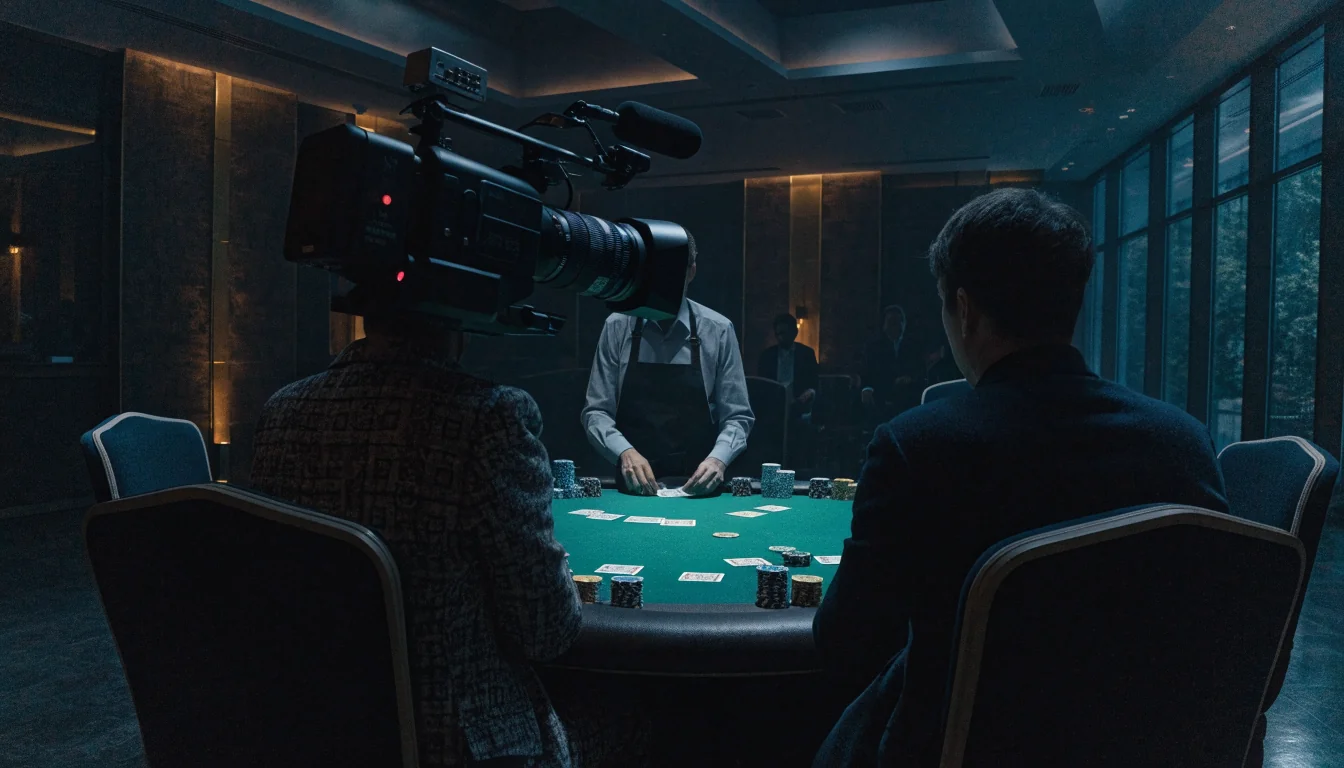
Table of Contents
- How live baccarat works in a UK-licensed casino
- Assessing baccarat casino options without relying on rankings
- Baccarat bets, card totals and the banker commission
- Playing live baccarat: pace, access and responsible limits
- Real-money baccarat and the limits of payment information
- Baccarat tables: minimum stakes, rules and commissions
- Other live casino games: roulette and blackjack mechanics
- Lightning baccarat: what can and cannot be established
- Live dealers, mobile access and the baccarat table experience
- Baccarat bonuses: wagering requirements and game weighting
How live baccarat works in a UK-licensed casino
Live baccarat combines a streamed game with a digital betting interface. The game takes place in a studio, where a human dealer conducts it in real time; the casino’s online service carries that footage to players, who submit their bets through controls displayed on screen. The result is a format in which the dealer’s actions are shown as they happen, while betting is handled through the separate interface rather than by communicating a wager verbally.
That distinction helps explain what “live” means in this setting. The dealer is part of the streamed game, not an animated character generated by software. The interface, meanwhile, provides the means to participate remotely. Both parts are necessary to the format: without the stream, the dealer’s activity would not be visible in real time; without the betting controls, a viewer could not place a wager through the online casino.
A live baccarat session is therefore not simply a video of a casino game. It is a connected service in which the stream presents the dealer-led action and the on-screen interface allows bets to be placed. The screen brings these elements together, but they serve different purposes. The dealer conducts the game in the studio, and the player uses the interface to take part from elsewhere. This arrangement gives online baccarat a human-led presentation while keeping participation within the casino’s digital platform.
Choosing a live baccarat casino in the UK involves more than finding a table: payout arrangements are also worth checking. This guide highlights the payout speed stated for each operator.
Payout speed: 1-3 business days Jetsetspins lists a payout speed of 1–3 business days.
Payout speed: 1-3 business days WinBeast lists a payout speed of 1–3 business days.
Payout speed: 1-3 business days NightLuck lists a payout speed of 1–3 business days.
Payout speed: 1-3 business days x3bet lists a payout speed of 1–3 business days.
Payout speed: 1-3 business days Zombillion lists a payout speed of 1–3 business days.
Payout speed: 1-3 business days BeOnBet lists a payout speed of 1–3 business days.
Payout speed: 1-3 business days SlotoSport lists a payout speed of 1–3 business days.
Payout speed: 1-3 business days Chanze lists a payout speed of 1–3 business days.
Payout speed: 1-3 business days SpinFormula lists a payout speed of 1–3 business days.
Payout speed: 1-3 business days EvoSpin lists a payout speed of 1–3 business days.
The UK licensing condition is central to whether a live dealer casino may legally offer gambling to people in the market. An operator serving UK customers must hold the relevant operating licence from the UK Gambling Commission. The fact that a baccarat game is streamed from a studio does not remove that requirement: the online gambling service still falls within the UK regulatory framework. A site’s presentation as a live casino, or the presence of a human dealer on screen, is not a substitute for the required licence.
This makes the meaning of “UK-licensed” more specific than a general reference to a casino being available online. The relevant point is that the operator providing gambling to UK customers holds a current UK Gambling Commission licence. A live stream may originate from a studio, but the operator’s provision of the game to customers is what brings the service within the licensing condition. Live baccarat is legal in the UK when offered by a casino holding that licence.
For someone comparing baccarat casino sites, the format can be understood without treating the stream as evidence of anything beyond the visible game. It shows a human dealer conducting play in real time, with betting taking place through the on-screen controls. The stream and interface establish how participation is delivered; they do not, by themselves, establish that an operator is licensed. Licensing is a separate condition of lawful provision in the UK.

The term “baccarat online casino” can refer to services offering different ways to present the game, but the live-dealer format has a clear defining feature: a human dealer conducts the game in a studio and the action reaches players through a real-time stream. Bets are placed digitally through the casino interface. This description concerns the delivery of live baccarat, rather than the calculation of hand totals or the conditions attached to individual tables.
In practical terms, the format joins a physical dealer-led game to remote participation. The dealer is visible through the stream, while the interface carries the player’s betting activity. A UK-facing service must also meet the local licensing condition. These are separate aspects of the experience: the studio and stream describe how the game is presented, the interface describes how bets are placed, and the UK Gambling Commission licence establishes the regulatory basis on which the operator can offer gambling to UK customers.
Assessing baccarat casino options without relying on rankings
A ranking can make different baccarat offerings appear directly comparable, although the order alone does not explain what was assessed or whether the criteria matter to a particular player. A more useful comparison separates legal eligibility from the characteristics of the live format. For UK play, a remote operator serving the British market must hold the relevant Gambling Commission licence. This is a threshold condition, not evidence that one site offers a better baccarat experience than another.
- Check for a current UK Gambling Commission licence
- Keep regulatory status separate from quality judgements
- Assess the live format’s practical fit for your needs
- Rely on a casino’s position in a list as evidence of licensing
- Combine regulatory status with subjective features into one score
- Assume the live format is automatically preferable to digital
Treat licensing as a threshold
The licence question is distinct from a quality judgement. A casino’s position in a list, presentation of its games or claims about its service cannot replace the requirement for a current UK operating licence. Conversely, meeting that requirement does not establish that its live baccarat tables will suit every intended use. It indicates that the operator falls within the local regulatory system; other observations concern the format and its practical fit.
Comparisons should therefore avoid combining regulatory status with subjective features into a single unexplained score. The former can be checked against the relevant licensing record. The latter require attention to what the live game involves and what conditions it places on play. Keeping those questions separate makes the basis for any assessment clearer.
Consider what the live format changes
Live baccarat differs from a digital version in its relationship to the game: play is conducted in real time, with a human dealer, and can provide interaction and a more immersive, real-casino feel. That experience may be central to the choice of format, but it is not a universal measure of quality. A player seeking a live setting may value it; someone primarily concerned with a faster, digital experience may not.
The live format also brings practical trade-offs. Live games proceed more slowly than digital versions, tend to have higher minimum bets and depend on a stable internet connection. These are characteristics of the format rather than grounds for assuming that every table or operator is identical. A comparison should ask whether those conditions are compatible with the intended session, without treating “live” as automatically preferable.

Rankings often compress such differences into a short verdict. That can obscure the distinction between a feature that is objectively relevant, such as the pace of live play, and a preference, such as wanting the atmosphere of a real casino. A sound assessment states which kind of consideration is being used and does not present personal suitability as a universal result.
Use a consistent basis for comparison
A practical review can be structured around a few separate questions: does the operator meet the UK licensing requirement; is the live-dealer format actually the intended form of baccarat; and are its general conditions compatible with the planned way of playing? The answers should be reported separately, rather than converted into an unsupported claim that one option is “best”.
Evidence should also be proportionate to the claim. A general description of live baccarat supports the conclusion that the format involves real-time play and may feel more immersive. It does not establish that a particular casino’s tables are more engaging, more reliable or better suited to a specific player. Those stronger comparisons require relevant, current evidence about the individual offering.
The phrase “best baccarat casino in the UK” has no single objective meaning unless the criteria are defined. It might refer to the live experience, the conditions of play or some other feature, but those are not interchangeable. Where a comparison does not disclose its method, its order should be treated as an editorial judgement rather than a measured result.
A restrained assessment is consequently more useful than a bare ranking: verify the regulatory threshold, identify the live format’s relevant trade-offs, and distinguish those facts from preference. This approach does not produce a universal winner. It makes clear what a comparison can support and where its conclusions depend on the needs of the person choosing.
Assessing Baccarat Options
- Verify the operator holds a valid UK Gambling Commission licence
- Distinguish between objective format trade-offs and personal preferences
- Use consistent, separate criteria for licensing, format, and conditions
- Treat rankings as editorial judgements rather than measured results
Baccarat bets, card totals and the banker commission
In standard baccarat, the central comparison is between two hands: Player and Banker. The names identify the sides of the game, not the person placing a wager or the casino. A bet can be placed on either hand finishing with a total closer to nine, or on the hands ending level. The cards are then dealt to both sides, and the winning outcome is determined by their final totals.
Each hand receives two cards to begin with. Card values are combined, but a total above nine is reduced to its second digit. For instance, a hand whose cards add to 15 counts as five, rather than 15. This keeps baccarat totals within a single-digit range and makes the distance from nine the basis of the comparison. The hand nearest to nine wins; an equal total produces a tie.
The Player and Banker bets refer to which hand is expected to finish closer to nine. They do not require a separate decision about which cards should be drawn. In standard play, the dealing procedure determines whether either side receives a third card, using the hand totals and the game’s rules. As a result, the initial two-card totals may not be the final scores. The outcome is assessed only after any required third card has been dealt.
A Tie bet predicts that the two hands will finish with the same total. It is distinct from choosing Player or Banker: neither side is closer to nine when the scores match. The three selections therefore cover the principal outcomes of the comparison. The distinction matters because a tie is a result in its own right, not merely a situation in which a Player or Banker wager has yet to be settled.

The Banker selection has a commission condition that affects its return. When Banker wins, a house commission of 5% is typically applied to that winning bet. This charge is tied to the Banker outcome; it is not a general deduction from every wager or from a Player win. The practical implication is that the displayed or stated return for a successful Banker selection should be read alongside the commission rule, rather than treated as a net amount automatically received in full.
The commission also helps explain why the three bets should not be judged solely by their labels. Player and Banker are competing hand outcomes, while Tie is a separate prediction, and Banker carries its own charge when successful. These mechanics are relevant whether baccarat is played at a UK Baccarat casino or through a live table: the essential task remains to identify which hand will finish closest to nine, with the commission affecting the Banker result.
A concise way to follow a hand is to separate the stages. First, note the two initial cards on each side. Next, convert any total above nine to its final digit. Then account for a third card if the rules call for one, and compare the completed totals. Finally, match the result to the selected outcome: Player, Banker or Tie. Keeping scoring separate from the wager makes the settlement easier to understand, particularly when a Banker win is subject to commission.
Following a Hand
Note the two initial cards dealt to both the Player and Banker sides.
Combine the card values and reduce any total above nine to its second digit.
Account for a third card if the standard dealing rules call for one.
Compare the completed totals to determine if the Player, Banker, or a Tie wins.
These rules describe the standard structure rather than a prediction method. A previous hand’s result does not change how the next hand is scored: each outcome depends on the cards dealt and the applicable drawing procedure. Baccarat is therefore read through its final totals and the selected bet, not through an expectation that one side is due to win.
Playing live baccarat: pace, access and responsible limits
Live baccarat is a slower form of play than its digital equivalent. A dealer manages the game in real time, so each round follows the pace of the table rather than moving immediately from one result to the next. This can make the session feel closer to a casino environment, with live interaction and a view of the play, but it also means fewer decisions occur within the same period.
That difference matters when planning a session. A longer interval between rounds does not make gambling less costly or change the uncertainty of the outcome. Nor does a slower game provide a reason to extend play beyond a planned stopping point. A budget and a time boundary should be set before a session begins, and kept separate from any expectation of recovering earlier losses or continuing because of a recent win.
Live games also tend to have higher minimum bets than digital versions. The amount required at a particular table can affect how quickly a chosen budget is used, even when the pace is measured. The relevant minimum should therefore be considered before joining, rather than after play has begun. If the available stake does not fit the planned budget, choosing not to continue is a practical limit, not a reason to raise it.

A stable internet connection is necessary for live play. Interruptions may make it harder to follow a round or use the betting interface at the intended time. Access conditions can vary with the connection and device, so a session should not be treated as suitable where the stream or controls are unreliable. This is a practical requirement of real-time play, not a feature that can be resolved by changing baccarat strategy.
Real-time interaction contributes to the appeal of live dealer baccarat, but the visual and social elements do not alter the financial risk. The dealer’s presence does not make results predictable, and the atmosphere of a real-casino setting should not be confused with greater control over outcomes. A clear distinction between entertainment and financial expectation is useful when deciding whether to play.
For UK players, online gambling is lawful only through an operator holding the relevant UK Gambling Commission licence, and participation is restricted to adults aged eighteen or over. That legal framework does not remove the need for personal limits. A budget should reflect money that can be lost without affecting essential expenses; borrowed money or funds set aside for bills are not a suitable gambling budget. Once the limit is reached, play should stop rather than be extended in response to the result.
Free-play versions, where available, are not a source of real-money winnings. They may provide a way to become familiar with the appearance of a game, but they do not reproduce the financial consequences of staking money. Real-money play remains gambling, and neither a live stream nor a more immersive presentation changes that fact. This material is for entertainment purposes only, not gambling advice.
Responsible Gambling
Set a budget reflecting money that can be lost without affecting essential expenses; never use borrowed funds or money set aside for bills.
Real-money baccarat and the limits of payment information
A baccarat game can be described without establishing whether it is available for real-money play. Rules, demonstrations and general explanations concern how the game works; they do not, by themselves, confirm that a particular casino accepts stakes on it. Real-money availability depends on the offering made by the operator, not simply on the presence of baccarat information or a game description.
In the UK, real-money online gambling is legal through operators holding the relevant UK Gambling Commission licence. That licensing condition applies to operators serving British customers, including those based elsewhere. It establishes a regulatory requirement, but does not establish the payment arrangements of any particular casino or confirm that a specific baccarat table is open for cash play.
Payment details are separate from game details. The availability of live baccarat does not show which deposit methods an operator accepts, how quickly a deposit is credited, or how long a withdrawal takes. Those conditions can be specific to an operator and may change. Accordingly, claims about payment speed or a particular service cannot be inferred from the fact that a casino offers baccarat. No particular deposit route or processing time can be treated as a general feature of online baccarat.
The distinction matters when interpreting descriptions of a baccarat casino game for real money. A page may explain the game while leaving the status of cash play unclear; conversely, an operator may list a live table without providing enough information in the game description to establish payment conditions. Game availability, licensing status and payment terms are different matters and should not be collapsed into one claim.

There is also a specific UK restriction on payment claims: remote gambling operators cannot accept credit-card payments for gambling. This does not establish what other methods an operator accepts, nor does it imply that a particular alternative is available. A reference to a casino being licensed or offering baccarat is therefore not evidence of a particular deposit option.
For a real-money live baccarat service, the relevant information must relate to the operator’s current terms rather than to general descriptions of the game. Licensing indicates the regulatory framework; it is not a statement about deposit minimums, payment processing, withdrawal timing or the availability of a named financial service. Those details should be kept distinct from the rules and presentation of the table.
This separation also limits what can responsibly be said in general about online real-money baccarat in the UK. The game may be discussed as entertainment, but payment conditions cannot be assumed from its format or from descriptions of baccarat elsewhere. Any material describing gambling should not be read as financial guidance or a recommendation to stake money.
Baccarat tables: minimum stakes, rules and commissions
The minimum stake is a table condition, not a fixed feature of baccarat. A specialist review has reported that many live baccarat tables start at around 20p. That figure is a reported observation, not a guarantee that a table at this level will be available at every casino or remain available over time. The starting stake can differ between tables, so the displayed limit matters more than a general estimate.
A table’s minimum determines the smallest permitted wager on an individual round. Its maximum stake sets the upper boundary. Together, these limits define whether a particular table is suitable for the intended budget. A low minimum does not make a table preferable by itself: other conditions, including the rules and paytable, affect how bets are settled. The stated limits should therefore be read alongside the table information before play begins.
Table Limits
Minimum and maximum stakes define the permitted betting range and determine if a particular table is suitable for your intended budget.
The paytable explains what a winning wager returns and whether a deduction applies. In standard baccarat, a winning Banker bet typically carries a 5% house commission. This is not an additional charge on every wager: it applies when the Banker bet wins. The amount returned on that outcome is therefore lower than a return without commission, and the table’s displayed terms should clarify how the deduction is handled. A commission rule can affect the value of the Banker outcome even when the bet itself is familiar.
Rules can also vary between tables. The dealing procedure and the conditions for drawing a third card determine how a round proceeds, while the paytable sets out the settlement of winning bets. Familiarity with the basic game does not remove the need to check those details: two tables labelled baccarat may not present identical conditions. Where the table information is unclear, its terms should be confirmed before any stake is placed.
A useful table comparison is therefore practical rather than a ranking exercise. The minimum and maximum stakes indicate the permitted betting range; the rules describe how the hand is dealt; and the paytable shows how outcomes are settled, including any Banker commission. These details provide a more precise basis for assessing a table than its title or general description. They also help distinguish a table that fits a chosen stake from one whose limits or settlement terms do not.
This is entertainment information, not gambling advice. Table limits and rules should be reviewed before play, and a budget should be set and kept to.

Other live casino games: roulette and blackjack mechanics
Roulette and blackjack are separate casino games, not variations of baccarat. Their live formats provide a useful point of comparison: roulette centres on a wheel and numbered pockets, while blackjack is a card game played against a dealer. The mechanics also show why the game name alone is not enough to establish how a particular table operates.
In live roulette, a dealer spins a physical wheel and the ball comes to rest in a numbered pocket. A winning selection is one that matches the number where the ball lands. Computerised roulette differs in that an outcome is generated by a Random Number Generator rather than a physical wheel. The distinction concerns how the result is produced; it does not change the basic objective of selecting a number or group of numbers.
Wheel layout affects the odds. American Roulette has green pockets marked 0 and 00, whereas European Roulette has a single green 0. The chance of a straight-up number winning is therefore different: the stated odds are one in 38 on an American wheel and one in 37 on a European wheel. The house edge also varies by bet type. Straight-up bets have a 2.9% edge, while other roulette bets have a 2.7% edge. In French Roulette, an even-money bet loses only half its stake when the ball lands on zero, a rule that changes the treatment of that outcome.
Features a single green 0, providing a one in 37 chance for a straight-up number to win.
Includes green pockets marked 0 and 00, resulting in a one in 38 chance for a straight-up number to win.
An even-money bet loses only half its stake when the ball lands on zero.
Live blackjack uses a different sequence of decisions. The game is streamed in real time with a human dealer, so the dealer is visible and interaction may be possible through the table interface. The basic aim is to finish with a hand closer to 21 than the dealer’s, without exceeding 21. This describes the objective, but not every table rule: details of how a particular game handles decisions and payouts need to be read in its own rules.
Blackjack retains a house edge, so the possibility of making decisions during a hand does not remove the casino’s mathematical advantage. A staking approach such as Martingale—raising stakes after losses—does not guarantee recovery and can still produce losses. A sequence of previous outcomes does not establish what a later hand will do, and increasing stakes cannot turn an unfavourable game into a guaranteed source of profit.
These comparisons should not be treated as evidence about baccarat rules or table conditions. Each game has its own outcome mechanism, available bets and house edge. Live presentation changes how a game is delivered, not the underlying mechanics described by its rules. This information is for entertainment purposes only and is not gambling advice.
Lightning baccarat: what can and cannot be established
The word “Lightning” attached to baccarat is not enough to establish how a particular game works. It does not, by itself, identify the rules, explain how any added feature affects a hand, or show what outcomes are possible. Those details depend on the game’s published rules and cannot be inferred from the name.
The established basis for standard baccarat is narrower: bets can be placed on the Player hand, the Banker hand or a Tie. That describes the available betting choices in the standard game; it does not confirm that a Lightning-branded version follows the same procedures in every respect. Nor does it establish whether such a version is available at any particular online casino with Baccarat.

This distinction matters when a live Baccarat casino site presents a game under a modified title. A familiar name may indicate a connection to baccarat, but it is not a substitute for the game rules. Without a clear description of the mechanics, claims about special cards, multipliers, altered payouts or improved chances would be speculation. None of those properties should be assumed from the word “Lightning” alone.
A casino with Baccarat may offer standard tables, while a particular title may have its own rules or may not be offered there at all. The same applies to online casinos with Baccarat in the UK: the general presence of baccarat does not establish that a Lightning version is included. A game’s name, thumbnail or promotional description cannot settle questions about its betting options or how its outcomes are determined.
The dependable distinction is therefore between standard baccarat, for which the Player, Banker and Tie bets are established, and a Lightning-labelled game, whose specific features require a separate rules description. Where that description is unavailable or unclear, the accurate conclusion is limited: the title suggests a variation, but its mechanics and outcomes remain unconfirmed. This avoids treating a name as evidence and keeps statements about a Baccarat casino site tied to what its game information actually explains.
Live dealers, mobile access and the baccarat table experience
A live baccarat table combines a streamed game with an on-screen betting interface. The dealer handles the game in a studio, while the video shows play as it happens and the interface records the bets. This differs from a fully digital version, where the game is presented without a human dealer appearing in a real-time stream.
Live vs Digital Baccarat
Live baccarat features a human dealer in a studio via a real-time stream, providing a tangible, casino-like setting. In contrast, digital versions are wholly automated without a human dealer appearing in a live stream.
The distinction affects the feel of a session. Seeing a dealer and the table gives the game a more tangible, casino-like setting, with interaction taking place in real time rather than through a wholly automated presentation. The interface remains the means of participating: the stream shows the table, while the separate controls are used to place bets. The format therefore depends on both the live video and the functioning betting screen.
Mobile access should be considered separately from the live format itself. The existence of a live baccarat table does not, by itself, establish that it works on every phone or tablet, or that the display and controls will behave identically across devices. Device compatibility and interface details are specific to the service being used; they cannot be inferred simply from the presence of a human dealer. The essential practical point is that the live stream and betting interface need a stable internet connection.
The pace is another difference from digital baccarat. A live dealer must conduct the game in real time, so rounds tend to move more slowly than their computerized counterparts. That can make the table feel more deliberate, but it also means that the speed of play is shaped by the live process rather than by an automated sequence. The format is consequently less suited to anyone expecting rapid, uninterrupted rounds.
Minimum bets are also higher in live games than in digital versions, although the actual starting point depends on the table. The live experience therefore involves more than a change in presentation: it combines human-led play, a video stream, interface-based betting, slower rounds and a need for reliable connectivity. These features describe the general format, not a guarantee about the performance of a particular mobile device or table.
Baccarat bonuses: wagering requirements and game weighting
A baccarat casino bonus can look substantial while offering limited value at a live table. The key distinction is between the bonus amount and the contribution that baccarat play makes towards any wagering requirement. A bonus may carry conditions requiring qualifying play before associated funds or winnings can be withdrawn, but baccarat may count at less than its full stake value.

A specialist review describes live games as receiving only a small share of wagering credit, citing 10% as an example. That figure should not be treated as a universal rate: the applicable weighting depends on the individual offer’s terms. Where live baccarat receives reduced credit, more qualifying play may be needed than a headline bonus suggests. Some promotions may exclude live games altogether.
The same caution applies to a baccarat online casino bonus advertised for new customers. A specialist review reports that UK welcome offers commonly take the form of free spins on slots, which cannot be used at live tables. This is a description of offers reported by that type of source, not a guarantee about every casino or a permanent market rule. A promotion labelled as a welcome bonus may therefore have little direct relevance to baccarat.
Before opting in, the terms should be checked for the eligible games, baccarat’s contribution rate, wagering requirements and any maximum-bet conditions. The treatment of bonus funds and winnings also matters: a promotion can be available to an account without being usable on the intended table. Where the terms do not clearly state how live baccarat counts, its practical value cannot be assumed.
Searches for a baccarat casino no-deposit bonus or a deposit offer do not establish that a suitable promotion is available. The offer’s written conditions remain decisive, regardless of its label. The same applies to offers described in connection with Bitcoin baccarat casinos: a payment-related description does not show that a bonus exists or that baccarat play qualifies.
Bonuses are optional promotional terms, not a measure of a table’s quality. Their apparent value depends on the conditions attached and the game weighting actually applied. This information is for entertainment purposes only and is not gambling advice.
How can you win live dealer roulette?
You win when the ball lands on a number you selected. The odds depend on the roulette version: American Roulette has 38 pockets, while European Roulette has 37.
How do you choose a live dealer casino?
For UK play, first check that the operator holds a current UK Gambling Commission licence. Then consider whether the live format suits you, as live games run more slowly than digital versions and require a stable internet connection.
What are the different types of roulette you can play with a live dealer?
Live roulette includes European Roulette, with one green zero pocket, and American Roulette, with both zero and double-zero pockets. French Roulette is another variant; even-money bets lose only half when the ball lands on zero.
How do you play live roulette?
Place your bets using the on-screen interface, then watch the live dealer spin the physical wheel. You win if the ball lands on a number you selected.
Why does the dealer always win in blackjack?
The dealer does not always win: players aim to beat the dealer with a hand totalling 21 or less. Blackjack retains a house edge, but that does not mean the dealer wins every hand.
Published by the fam bet Casino team.