
Live Blackjack Online Casinos in the UK: A Guide
 Available in GB
A practical overview of UK licensing, live dealer play, blackjack decisions, table formats and the terms attached to bonuses.

Assessing UK Blackjack Casino Sites
Choosing an online casino for blackjack begins with a legal distinction: a site’s appearance, marketing or location does not establish that it is authorised to serve customers in the UK. Remote gambling operators selling into the British market must hold the relevant licence from the UK Gambling Commission, wherever the operator itself is based. A live dealer casino is lawful in the UK when it holds that licence. Licensing is therefore a threshold for assessing a site, rather than a feature that can be balanced against an attractive offer or a broad game catalogue.
Treat licensing as a condition of availability
For real-money online gambling in Great Britain, the operator must be licensed by the Gambling Commission. The requirement applies to operators based abroad as well as those located in Britain: the relevant question is whether the operator is licensed to provide gambling to the British market, not where its offices or studios are situated. A foreign address does not, by itself, make a casino unsuitable; a licence from another jurisdiction does not replace the UK licence required to serve British customers.
Choosing a live blackjack casino involves more than the game itself, so it helps to check practical details before you play. This reference highlights the payout information available for each listed operator.
Payout speed: 1-3 business days Jetsetspins lists a payout speed of 1–3 business days, a useful detail to consider when choosing a live blackjack casino.
Payout speed: 1-3 business days WinBeast lists a payout speed of 1–3 business days. This gives players a stated timeframe to bear in mind.
Payout speed: 1-3 business days NightLuck lists payouts at 1–3 business days, providing a clear point of reference for players considering its live blackjack offering.
Payout speed: 1-3 business days x3bet gives a payout speed of 1–3 business days, a practical detail for players reviewing their casino options.
Payout speed: 1-3 business days Zombillion lists a payout speed of 1–3 business days. Players can use this stated timeframe as one factor in their choice.
Payout speed: 1-3 business days BeOnBet lists payouts at 1–3 business days, offering a specific timeframe to consider alongside live blackjack.
Payout speed: 1-3 business days SlotoSport lists a payout speed of 1–3 business days, giving players a concrete detail to note.
Payout speed: 1-3 business days Chanze lists payouts at 1–3 business days, a useful practical detail for players assessing its casino offering.
Payout speed: 1-3 business days SpinFormula states a payout speed of 1–3 business days, which players may consider when reviewing their options.
Payout speed: 1-3 business days EvoSpin lists a payout speed of 1–3 business days, providing a stated timeframe for players to take into account.
This matters when comparing sites described as the best UK blackjack casinos. A list of available games or a familiar brand name cannot establish that a particular operator is authorised. Nor does the phrase “UK casino” on a page prove that the site meets the local licensing requirement. The assessment needs to establish which operator is responsible for the gambling service and whether that operator has a current UK Gambling Commission operating licence.
The regulatory framework also has a territorial scope. The Gambling Act 2005 applies to gambling in England, Wales and Scotland, while Northern Ireland is outside that Act. This distinction is relevant when describing the legal position across the whole United Kingdom. It does not change the central point for sites selling into the British market: the remote operator needs the appropriate Gambling Commission licence. Broad claims about one statute governing every part of the UK should therefore be avoided.
Separate the operator from the brand
A casino brand and the legal entity operating the site are not always described in the same way. Site assessment should focus on the company responsible for offering the gambling service, rather than assuming that the name on a homepage is itself the licensed operator. The operator’s identity and its licence status are connected questions: a licence associated with a different business does not automatically establish that the site being considered is covered.
This distinction is useful when comparing several online blackjack casinos. A brand may present itself as part of a wider group, use a separate customer-facing name, or appear in advertising alongside other services. Such presentation does not determine the regulatory position. The relevant issue remains whether the operator providing the gambling service to British customers holds the required licence.


A careful assessment consequently treats licensing information as something to verify, not as a decorative trust label. Statements such as “regulated” or “licensed” have practical meaning only when they refer to the operator and the relevant UK authorisation. If the site’s identity or licensing status is unclear, there is not enough basis to classify it as a suitable licensed casino.
Compare sites only after the legal threshold
Once licensing has been established, other aspects of a site can be compared on their own merits. The order matters. A generous-looking promotion, extensive menu or prominent blackjack section does not compensate for the absence of the licence required to serve the British market. Conversely, a licence confirms regulatory authorisation; it does not establish that every other feature of a casino will suit every customer.
This separates two different questions that are sometimes collapsed into a single “best blackjack casino” judgement. The first is whether the site is legally available to customers in the relevant market. The second is whether its offering is preferable among licensed options. The first depends on the operator’s regulatory status. The second requires comparisons of the site’s own services and terms, which should not be inferred from licensing alone.
A ranking of online blackjack casinos can therefore be useful only if it makes its basis clear. A position in a list is not a substitute for checking the operator’s status, and a high rating cannot establish that the site holds a current licence. Equally, licensing should not be presented as proof that one operator is better than another. It establishes a regulatory condition, not a universal quality score.
- Verify the operator’s current UK Gambling Commission licence
- Identify the legal entity responsible for the service
- Assume a site is licensed based on “UK” in the brand name
- Rely on a licence from another jurisdiction as a replacement
Read claims about UK availability carefully
Casino websites may use “UK” in a brand description, a page heading or promotional copy. That wording is not the same as confirmation of permission to offer real-money gambling to customers in Britain. The regulatory requirement follows the service being sold into the market, rather than the wording used to describe it. A site based overseas still needs the relevant UK licence if it sells remote gambling to British customers.
The same principle applies when a site refers to an overseas gambling licence. Such a licence may describe the operator’s status elsewhere, but it is not the UK Gambling Commission authorisation required for remote gambling operators serving the British market. Offshore operators outside the UK regulatory system do not hold a UKGC licence. Their presence online or accessibility to a user does not alter the licensing requirement for operators selling into Britain.
Careful wording is important here. “Available online” and “licensed to serve the British market” are not interchangeable descriptions. A site may be technically reachable without being part of the locally regulated market. For a UK blackjack casino assessment, availability should mean lawful provision under the relevant UK licensing framework, not simply that a webpage can be opened.
Assess the evidence, not the presentation
A polished interface, familiar payment branding or professional-looking advertising may affect a site’s presentation, but none of these features proves that the operator has the required licence. The same applies to claims about safety or trustworthiness when they are not tied to a clear regulatory status. Such signals should not be treated as substitutes for the legal condition that applies to real-money online gambling.


The operator’s licensing information should be considered alongside its identity. Where the company named in the site’s terms differs from the brand name, the relationship needs to be clear enough to identify who provides the gambling service. If the material does not make that relationship intelligible, confidence in the site’s regulatory position is correspondingly limited. This is a reason to withhold a positive assessment, not a basis for guessing which company is responsible.
The distinction is especially important in comparison pages that describe several “best blackjack casinos UK”. A casino may be included in an editorial list, but inclusion does not itself verify its licence. A responsible comparison should treat the licence as a necessary eligibility criterion and avoid presenting promotional language as independent evidence. It should also avoid implying that all licensed sites offer identical services or have identical terms.
Keep legal status separate from personal suitability
A current operating licence is a necessary condition for a legal online casino serving UK players, but it does not answer every question about suitability. It does not mean that a site is the right choice for every person, nor does it establish that its promotions, interface or particular services are preferable. Those are separate matters and require their own assessment.
This is why the phrase “best online blackjack casino” has no single regulatory answer. Licensing determines whether an operator meets the relevant market requirement; it does not rank licensed operators. Any judgement about which site is preferable must be based on criteria beyond the licence, and those criteria should be stated rather than hidden behind a general label such as “best”.
Licensing Requirement
Remote gambling operators serving the British market must hold a relevant licence from the UK Gambling Commission to be lawful.
Age is another part of the legal context. Online gambling in the UK is lawful for adults aged eighteen and over when the operator holds a UK Gambling Commission licence. Operators must verify a customer’s age before allowing a deposit into a gambling account. These requirements describe the legal framework; they should not be confused with a guarantee about the quality or suitability of a particular casino.
For sites serving Great Britain, the licensing requirement applies regardless of where the operator is located. For the United Kingdom as a whole, legal descriptions should also account for the different territorial scope of the Gambling Act 2005, which does not extend to Northern Ireland. Precision on these points is more useful than treating “UK licensed” as a loose marketing phrase.
A sound basis for comparison
A defensible assessment of UK blackjack casino sites begins by identifying the gambling operator and establishing whether it holds a current UK Gambling Commission operating licence for the relevant service. Only after that threshold is met does it make sense to compare the site’s other characteristics. Brand recognition, promotional presentation and claims of quality do not replace this check, while the presence of a licence should not be stretched into a claim that the operator is automatically the best choice.
The result is a narrower, more reliable use of terms such as “best blackjack casino UK” and “best online blackjack casinos”. They can describe a comparison among eligible, licensed operators, but they cannot serve as evidence of eligibility themselves. In the British market, legal availability rests on the operator’s UK regulatory authorisation, not on the location of its business or the language used in its advertising.

How Live Dealer Blackjack Works
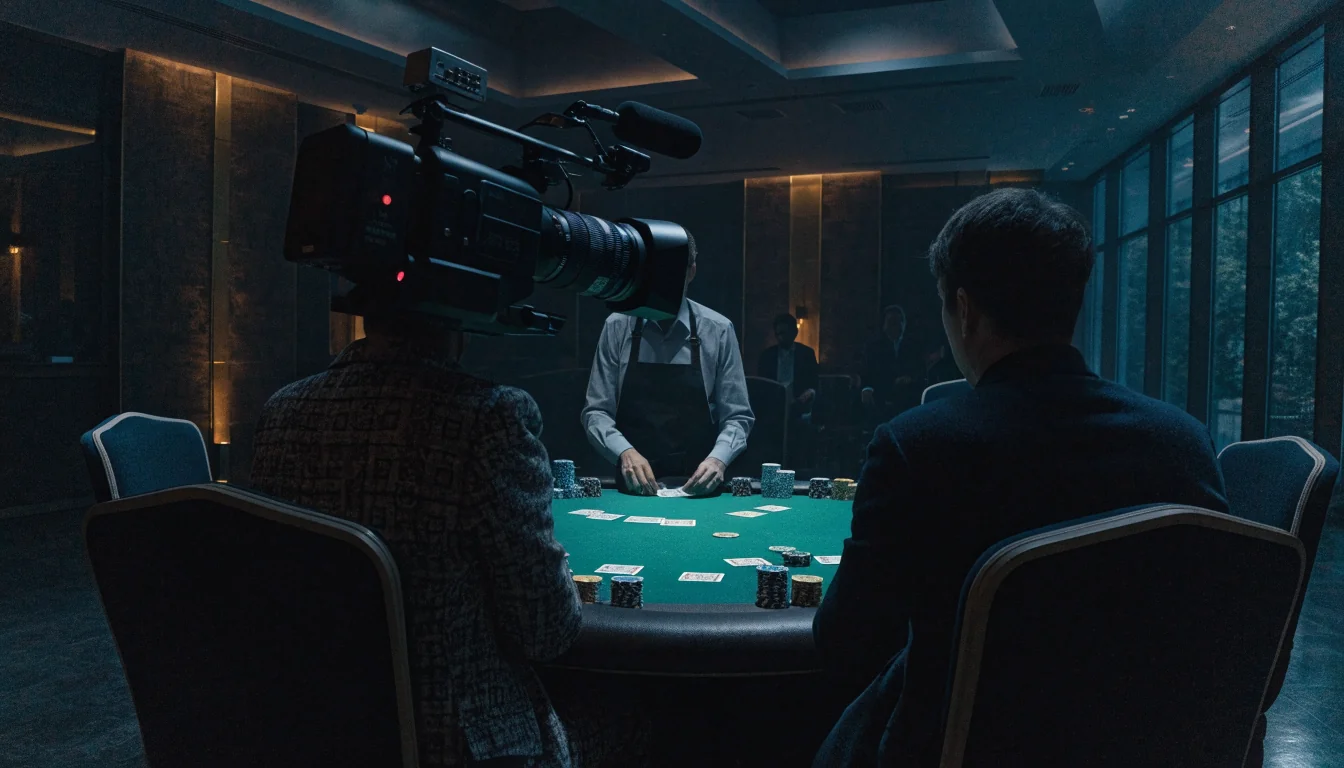
Live dealer blackjack combines a video stream from a studio with a digital betting interface. A human dealer handles physical cards at the table, while players follow the action on screen and submit their bets through controls in the online casino. The stream and the interface are parts of the same session: the dealer’s actions are shown as they happen, and the software records the choices made by players.
This arrangement differs from a digital blackjack game in which the play is presented through software without a live dealer dealing physical cards in view. In a live game, the studio feed shows the dealer and the table, giving the session a visible human element. The online interface remains necessary, however. It is used to enter bets and to communicate the player’s decisions to the game, rather than placing chips directly on a physical table.
The distinction is not simply visual. In a studio-based session, the cards being dealt are physical objects handled by the dealer, and the stream lets players observe that process in real time. The dealer is not an animated character or a prerecorded segment: the live feed shows a person conducting the game as it unfolds. Players can therefore see the table activity and, where the game provides it, interact with the dealer through chat.
The betting interface sits alongside the video. It presents the controls needed for the current hand and communicates selections to the game. A player does not send a verbal instruction to the dealer or manipulate cards directly; the selection is made on screen. The dealer then continues the hand in accordance with the actions registered through the interface. This division of roles—physical dealing in the studio and digital input from remote players—is central to how a live dealer blackjack session works.
A video feed from a studio showing a human dealer handling physical cards in real time.
A digital system used to enter bets and communicate player decisions to the game.
Optional features like chat that allow communication with the dealer and other players.
The video stream and the betting controls serve different purposes. The stream conveys what is happening at the table, while the interface is the channel for placing bets and making available selections. A delay or interruption in one can affect how the session is experienced, although the game’s actual operation remains tied to the table and the platform’s software. The visual feed should not be mistaken for direct physical access to the cards: participation is mediated by the online system.
A live dealer is also a point of interaction rather than only a visual feature. Some games include chat, allowing communication with the dealer and other players at the table. This can make the session feel more social than a solitary digital game, but chat is separate from the mechanics of the hand. Messages do not replace the on-screen controls, and the presence of chat does not mean that every player will communicate. Its availability and use depend on the particular game.
Some live blackjack tables also offer side bets. These are additional betting choices presented alongside the main game, rather than a different way of dealing the cards. Their availability is a feature of the table, not a necessary part of live blackjack itself. The precise options can vary, so the presence of a live dealer alone does not establish which side bets are offered or how they are settled. Those details belong to the individual game’s displayed rules and information.

Another possible feature is Bet Behind. It allows a player to place a bet in connection with a hand being played by someone else at the table, rather than taking a seat as the person making the hand’s decisions. This can broaden participation when a table is operating with other players, but it does not turn the observing player into the active player for that hand. The distinction matters: watching another person’s play and backing a hand are not the same as controlling one’s own cards and choices.
These features should be understood as optional components of the live format. A table can provide a human dealer and physical-card play without offering every interaction or betting feature. Chat, side bets and Bet Behind may appear in some games, but none should be assumed solely from the label “live dealer”. The game’s own screen indicates which functions are available in that session.
For UK players, the phrase “live dealer blackjack” therefore describes a form of online participation in a studio-run card game, not a remote connection to a local casino table. The dealer handles the cards in the studio; players watch through the stream and use the online interface to take part. The experience retains a human and physical component while remaining dependent on software for the remote betting process. This combination distinguishes live blackjack from a game presented entirely through a digital interface, without changing the fact that both are played online.
The format can be assessed by separating what is visible from what is controlled. The dealer, cards and table activity are visible in the stream. Bets and any available choices are submitted through the on-screen interface. Chat, where included, adds a communication channel, while side bets and Bet Behind add possible ways to participate. These elements may sit together in one game, but they are not interchangeable: one shows the live action, another transmits player input, and others provide additional features.
Live dealer blackjack is a form of online participation in a studio-run game, not a remote connection to a local physical casino table.
A live session is consequently neither an ordinary video broadcast nor a conventional in-person table. The stream alone would allow observation but not participation; the interface alone would not show a human dealer handling physical cards. Together, they create the online live dealer format. For blackjack, its defining characteristics are the real-time studio feed, a human dealer using physical cards, and remote betting through the game’s controls. Interaction features can supplement that structure, but their presence and scope depend on the specific table.
Blackjack Rules, Decisions and the House Edge
Blackjack is a contest between a player’s hand and the dealer’s. The aim is to finish with a total of 21 points, or as close to it as possible without going over, while beating the dealer’s hand. The objective makes every decision a trade-off: seeking a stronger total may improve the chance of beating the dealer, but going over 21 means the hand has missed the target.
A hand is therefore not judged in isolation from the dealer’s result. A total that appears strong may still fail to beat the dealer, while a less ambitious total may be enough in a particular round. The central uncertainty is that the dealer’s final hand is not yet known when a player must decide how to proceed. Blackjack decisions involve acting with incomplete information rather than following a choice that guarantees a win.

The outcome depends on both sides’ hands. Reaching 21 or coming close does not, by itself, establish that a round has been won: the dealer’s hand remains relevant. Equally, the objective is not simply to make the largest possible total, because exceeding 21 defeats the purpose of improving the hand. This tension between strength and risk is fundamental to the game.
Decisions within a hand
A blackjack decision is best understood as a choice about risk, not as a way to remove it. A player may try to improve a hand, but any attempt to do so has to be considered against the possibility of going over 21. Holding a hand avoids that particular risk, but may leave it weaker than the dealer’s eventual total. Neither approach can be evaluated without considering the current hand and the uncertainty surrounding the dealer’s result.
This is why a single outcome does not establish whether a decision was sound. A choice made under uncertainty can lead to a loss, and a risky choice can sometimes be followed by a win. The result of one round reflects how the hands developed; it does not prove that the decision will produce the same result in later rounds. Repeated decisions matter, but they do not make individual outcomes certain.
The wording “how to win” can suggest a reliable method for producing a winning hand. Blackjack does not provide one. Its objective is clear, but no decision can ensure that the dealer will be beaten. A decision may improve the prospect of reaching a competitive total while still leaving the player exposed to an unfavourable hand or to going over 21. Winning is an outcome, not a procedure that can be guaranteed.
Attention No decision or strategy can guarantee a win or ensure that the dealer will be beaten, as blackjack involves acting with incomplete information.
What the house edge means
Blackjack retains a house edge. In general terms, a house edge means the game is structured to favour the operator over time, rather than to assure a player of a positive result. It does not mean that every hand is lost, nor does it predict the outcome of a particular round. Individual results can vary, and a win in one hand does not cancel the underlying advantage built into the game.
The distinction between a single hand and repeated play is important. Short sequences can produce results that do not resemble the longer-term expectation. A run of wins does not show that the advantage has shifted, and a run of losses does not make a win due. Treating recent outcomes as a reliable guide to the next hand confuses past results with the uncertainty of a new one.
The existence of a house edge also does not imply that every blackjack game has an identical mathematical profile. The general point is that the game retains an advantage for the house; the amount should not be assumed to be fixed across all circumstances. A precise estimate requires evidence about the specific game and the conditions under which it is played. Without that, a precise figure would give an unwarranted impression of certainty.
Why staking systems do not remove risk
Staking systems change the size or sequence of wagers; they do not change the objective of blackjack or guarantee that a hand will beat the dealer. Martingale is one example of a system that can result in losses. A plan for increasing or adjusting stakes cannot prevent a hand from going over 21, ensure that the dealer will be beaten, or eliminate the house edge.

A staking sequence can also make the financial consequences of a run of unfavourable results more pronounced. The fact that a system prescribes a response after a loss does not make the next result more predictable. Nor does a winning hand prove that the system has overcome the game’s underlying advantage. The system may shape exposure to wins and losses, but it does not control the cards.
For that reason, blackjack strategy and staking strategy should not be treated as interchangeable. Decisions within a hand concern the attempt to reach a total that can beat the dealer without exceeding 21. Staking systems concern how wagers are arranged across hands. A system for managing wagers cannot guarantee the desired hand outcome, while a good hand outcome does not establish that a staking system is safe or dependable.
Blackjack is consequently a game of uncertain outcomes with a clear target but no guaranteed route to success. The player’s task within a hand is to weigh the prospect of improving the total against the risk of going over; the wider financial risk remains even when decisions are made carefully. Neither a winning streak nor a staking formula removes the house edge, and neither makes future results certain.
Playing Blackjack Online: Pace and Practical Requirements
Playing blackjack online involves more than choosing a table. The conditions of play affect how long a session takes, how much is required to join a table and whether the stream can be followed without interruption. These practical differences are especially relevant when comparing live blackjack with a digital game.
Practical Differences Between Live and Digital Play
Live tables generally move more slowly than automated digital versions because they depend on a human dealer’s actions. Additionally, live blackjack tables often have higher minimum starting stakes compared to other live casino games like roulette or baccarat.
Live tables move more slowly than digital versions. Each hand depends on the dealer’s actions and the pace of play at the table, rather than on an entirely automated sequence. As a result, fewer hands may be completed over a given period. That slower rhythm can make live play feel less continuous, but it also means that time spent at a table may not correspond to the same number of hands as in a digital game.
Minimum bets are another consideration. Live blackjack tables often have higher starting limits than some other live casino games, so the amount needed to join can vary by table. A specialist review has reported starting stakes of around 20p for many live roulette and baccarat tables, while noting higher starting limits for blackjack. That comparison is a snapshot from a review, not a fixed or universal price: table limits can differ between operators and can change. The displayed minimum is therefore more relevant to a particular session than a general comparison.

A stable internet connection is necessary to follow live play. Interruptions can affect the viewing experience and make it harder to keep track of what is happening at the table. Connection quality can also vary with the network and device being used, so a stream that works reliably in one setting may not do so in another. If the connection becomes unstable, continuing to place bets may make it harder to follow the session.
Time and spending limits are useful practical boundaries. Since live tables proceed at a slower pace, a session can last longer than expected even when the number of hands remains modest. A set budget should be established before play and treated as a limit, rather than increased to recover losses or extend a session. The table’s minimum bet should fit within that budget; otherwise, the game may not be suitable for that session.
Free-play versions can help familiarise players with an online interface, but they do not provide real payouts or winnings. They also do not reproduce every condition of real-money play, including the significance of a table’s minimum bet. This section is for entertainment purposes only and is not gambling advice.

Blackjack Game Formats and Table Features
The label “live blackjack” does not describe a single fixed table setup. Some tables may offer only the main blackjack wager, while others may add optional features such as side bets or Bet Behind. These options change what can be wagered on a hand, but their presence should not be taken to mean that every table offers the same choices.
A side bet is a separate wager offered alongside the main blackjack bet. Its terms and outcome are distinct from those of the main hand, so the table’s rules and paytable are important reference points before it is selected. The name of a side bet alone does not establish how it is settled or what it pays; those details depend on the particular table. Where the rules or paytable do not make the conditions clear, the feature cannot be assessed reliably.
Bet Behind provides another way to take part in a table. It allows a player to wager on a hand being played by someone else, rather than taking a seat and making decisions on that hand. The option may suit a table where the available play position is not being used by the person placing the Bet Behind wager. Its availability and conditions remain table-specific, so it should not be assumed to work identically across casino blackjack games.
Table Feature Summary
- Side bets are separate wagers with distinct terms from the main hand.
- Bet Behind allows wagering on another player’s hand without making decisions.
- Availability of these features is table-specific and not standard across all games.
These features are optional additions, not interchangeable versions of the main game. A side bet creates an additional wager; Bet Behind concerns whose hand the wager follows. Neither label, by itself, explains the full terms. A careful comparison therefore centres on what the table states about participation, eligible wagers and settlement, rather than on a feature name or visual presentation.
For a UK blackjack casino game, table information is part of the format, not merely supporting text. Rules and paytables can clarify which wagers are available and how the table treats them. They also help distinguish a table with extra betting options from one that offers only the main wager. A feature should not be treated as a benefit simply because it is present: its relevance depends on the terms and on whether it matches the intended way of playing.
The same caution applies when comparing casino blackjack games across a site. A shared game label does not establish that tables have identical features or conditions. Side bets may appear at one table and not another, and Bet Behind may be available only where the table supports it. The practical comparison is therefore table by table, using the displayed rules and paytable rather than assuming that a format is standard across the whole casino.
These distinctions concern the structure of the table and its available wagers, not the quality of a result or a way to improve it. Blackjack remains gambling, and optional wagers do not remove its financial risk. Content about game features is for entertainment purposes only, not gambling advice. A budget set before play should be treated as a firm limit, and losses or winnings should not lead to extending it.
Bonuses and Wagering Terms for Live Blackjack
A bonus advertised for an online casino does not necessarily apply to its live blackjack tables. The offer’s eligible games and wagering conditions determine whether blackjack play can help meet a requirement, and live games may receive only a small weighting. One specialist review, for example, describes a weighting of 10%; the applicable rate can depend on the offer’s own terms.
This distinction matters when comparing a blackjack casino bonus with a general welcome promotion. A headline offer may appear relevant to casino play but still exclude live tables, or count eligible stakes towards wagering at a reduced rate. Where the weighting is low, substantial live play may make little progress towards a requirement. The headline value alone therefore does not show how useful an offer is for live blackjack.
A specialist review also reports that most UK welcome offers are free spins for slot games, which cannot be used at live tables. This is a time-sensitive description of the offers covered by that review, not a guarantee about every operator or promotion. A casino blackjack bonus offer should be assessed by its stated eligibility rather than by its name or general advertising.
The same applies to a blackjack casino no-deposit bonus. The phrase does not establish that such an offer is available, that it includes live blackjack, or that any resulting balance can be withdrawn without conditions. The terms should specify which games qualify and whether winnings are subject to wagering requirements. Where those details are absent or unclear, the offer’s relevance to live play cannot be established.
Before opting in, the full terms should be checked for wagering requirements, game weighting and maximum bet limits. It is also important to distinguish between an offer that permits blackjack and one that counts blackjack wagers towards its requirement: these are not necessarily the same condition. Free spins, in particular, are generally tied to the slot games named in the promotion rather than being a cash balance for live tables.
Consequently, bonuses may have limited practical value for someone focused on live blackjack. The terms, not the promotional label, determine whether a particular casino bonus can be used at a live table and how much qualifying play contributes.
Is the house edge the same at live dealer casinos online?
No. It varies by game and bet: roulette straight-up bets have a 2.9% house edge, while other roulette bets have a 2.7% edge.
How does the house edge change between games?
In roulette, straight-up bets have a 2.9% house edge and other bets have a 2.7% edge. French Roulette also reduces the loss on an even-money bet when the ball lands on zero.
Why does the dealer always win in blackjack?
The dealer does not always win. Players can beat the dealer by getting closer to 21 without going over, but blackjack still has a house edge.
What are the different types of roulette you can play with a live dealer?
Live roulette includes European, American and French Roulette. American Roulette has both 0 and 00, while European Roulette has a single 0; French Roulette gives a reduced loss on even-money bets when the ball lands on zero.
Created by the ”fam bet Casino” editorial team.