
Deal or No Deal Casino UK: Format and Game Reviews
 Available in GB
It distinguishes the television show’s Banker-offer structure from the evidence available for demos, bonuses, named variants and return claims.

Table of Contents
- The Deal or No Deal Format Behind the Casino Games
- How the Online Game’s Qualification and Bonus Flow Works
- Banker Offers, Decisions and the Final Briefcases
- What Free-Play and Demo Searches Can—and Cannot—Establish
- Bonus Offers and Named Slot Variants: Evidence Limits
- Free Spins and Box Clever Searches
- What’s in Your Box: The Verified Return Figure
- Review Searches for Double Action and What’s in Your Box
- Perfect Play: No Verified Game Details
- Free Online Games: Availability Is Not Established
The Deal or No Deal Format Behind the Casino Games
The television format of Deal or No Deal centres on a choice between a known offer from the Banker and the uncertain value associated with a closed briefcase. Its appeal comes from the tension between those two possibilities: the contestant must judge an offer without knowing whether the final briefcase would contain more or less. This premise is the reference point for casino adaptations, although a shared name does not establish that an online game follows the television show’s full sequence.
In the main show, play begins with 16 briefcases. Contestants open three in the first round, after which the Banker makes an offer. The host then puts the choice to the contestant with the familiar question, “Deal or No Deal?” The question captures the central decision: take the offered amount or carry on without knowing what remains in the unopened cases.
That opening pattern sets up the relationship between uncertainty and the Banker’s offers. The contestant is not simply trying to identify a particular case. The defining task is to consider whether an offer is preferable to the possibility represented by the remaining briefcases. Across the show, the contestant receives three offers from the Banker before the final stage. The recurring decision gives the format its identity more than the briefcases alone: each offer turns a game of concealed values into a choice about when to stop.
For a Deal or No Deal casino UK 2026 search, payout information is one practical detail to check when considering an operator. The list below gives the stated payout timeframe for each.
Payout speed: 1-3 business days Jetsetspins has a stated payout speed of 1–3 business days.
Payout speed: 1-3 business days WinBeast lists payouts as taking 1–3 business days.
Payout speed: 1-3 business days NightLuck’s stated payout speed is 1–3 business days.
Payout speed: 1-3 business days x3bet gives a payout timeframe of 1–3 business days.
Payout speed: 1-3 business days Zombillion lists a payout speed of 1–3 business days.
Payout speed: 1-3 business days BeOnBet’s stated payout speed is 1–3 business days.
Payout speed: 1-3 business days SlotoSport gives 1–3 business days as its payout timeframe.
Payout speed: 1-3 business days Chanze lists payouts as taking 1–3 business days.
Payout speed: 1-3 business days SpinFormula has a stated payout speed of 1–3 business days.
Payout speed: 1-3 business days EvoSpin’s stated payout timeframe is 1–3 business days.
The reference to a final briefcase is also important. In the show’s main game, contestants predict whether the money in the last of the 16 cases to be opened will be higher than the Banker’s offer. The format therefore builds towards a comparison between an unknown amount and a stated one. It is not necessary to know the hidden value in advance for that comparison to matter; the uncertainty is the point on which the decision rests.
This structure helps explain why the title has carried over into casino products. A Deal or No Deal slot or other casino game may borrow the show’s name, visual language or broad idea of an offer against uncertainty, but the title by itself does not show how the product plays. Nor does it establish that the television sequence—opening cases, receiving offers and answering the host’s question—is reproduced. The phrase “Deal or No Deal” identifies a source concept, not a complete specification for every game that uses it.
That distinction matters when considering searches for Deal or No Deal slots in the UK. The show’s premise can provide context for the branding, but it cannot be used to infer a casino game’s rules, bonus stages or presentation. Those details belong to the individual product. A casino Deal or No Deal game might use a different structure from the broadcast format; without product-specific information, the comparison should stop at the shared theme.

The television version also gives the Banker a particular dramatic role. The offer is presented as an alternative to continuing with an unknown outcome, while the contestant’s response supplies the central moment of decision. This creates a simple contrast—certainty now or uncertainty later—without making the offer itself a prediction of what the remaining briefcase contains. It is a choice within the show’s format, not proof that the offer will be higher or lower than the eventual amount.
For casino adaptations, the same contrast may be suggested by the name, but it should not be treated as evidence of identical stakes or decision-making. A slot is a casino game, while the original programme is organised around a contestant, a Banker’s offer and a final comparison involving the unopened cases. The distinction is useful because searches for a Deal or No Deal slot game can otherwise blur the television premise with the mechanics of a specific online product.
The title can therefore be understood in two layers. First is the recognisable show concept: briefcases conceal different amounts, the Banker makes offers, and the contestant weighs an offer against an unknown result. Second are the individual casino games marketed under the same name. The first layer explains the reference; it does not settle the rules of the second. A game’s actual format needs to be established from its own description rather than assumed from the programme.
Attention: The title “Deal or No Deal” identifies a source concept and does not establish the specific rules, bonus stages, or presentation of an individual casino product.
For readers looking at Deal or No Deal casino games in 2026, the original show remains useful background, but only within those limits. It explains why offers, decisions and concealed values are associated with the brand. It does not demonstrate that all Deal or No Deal video slots use briefcases in the same way, include a Banker, or reproduce the television show’s progression. The format behind the name is clear; the mechanics of any casino adaptation are a separate matter.
How the Online Game’s Qualification and Bonus Flow Works
This structure matters because the title is not described as beginning directly with the briefcase decisions familiar from the television format. A player must first meet the game’s qualification condition.
Qualification depends on three rings. All three must land on a gold slice for the player to qualify. The condition is conjunctive: landing fewer than three rings on gold does not meet it.
After qualifying, the player may use Top Up to add to prizes. Top Up is optional, not a required step before the main game. The sequence then proceeds to the Deal or No Deal game. This gives the bonus flow a clear distinction between reaching the qualifying outcome, deciding whether to use Top Up, and entering the named game.
This sequence provides a useful way to understand searches for a Deal or No Deal slot machine game or an online casino version: the documented route is not simply a direct choice between a briefcase and an offer. The qualification condition comes first, followed by the optional prize-related step and then the game. The stages are part of one flow, but they do not establish every feature that might appear in a slot interface.
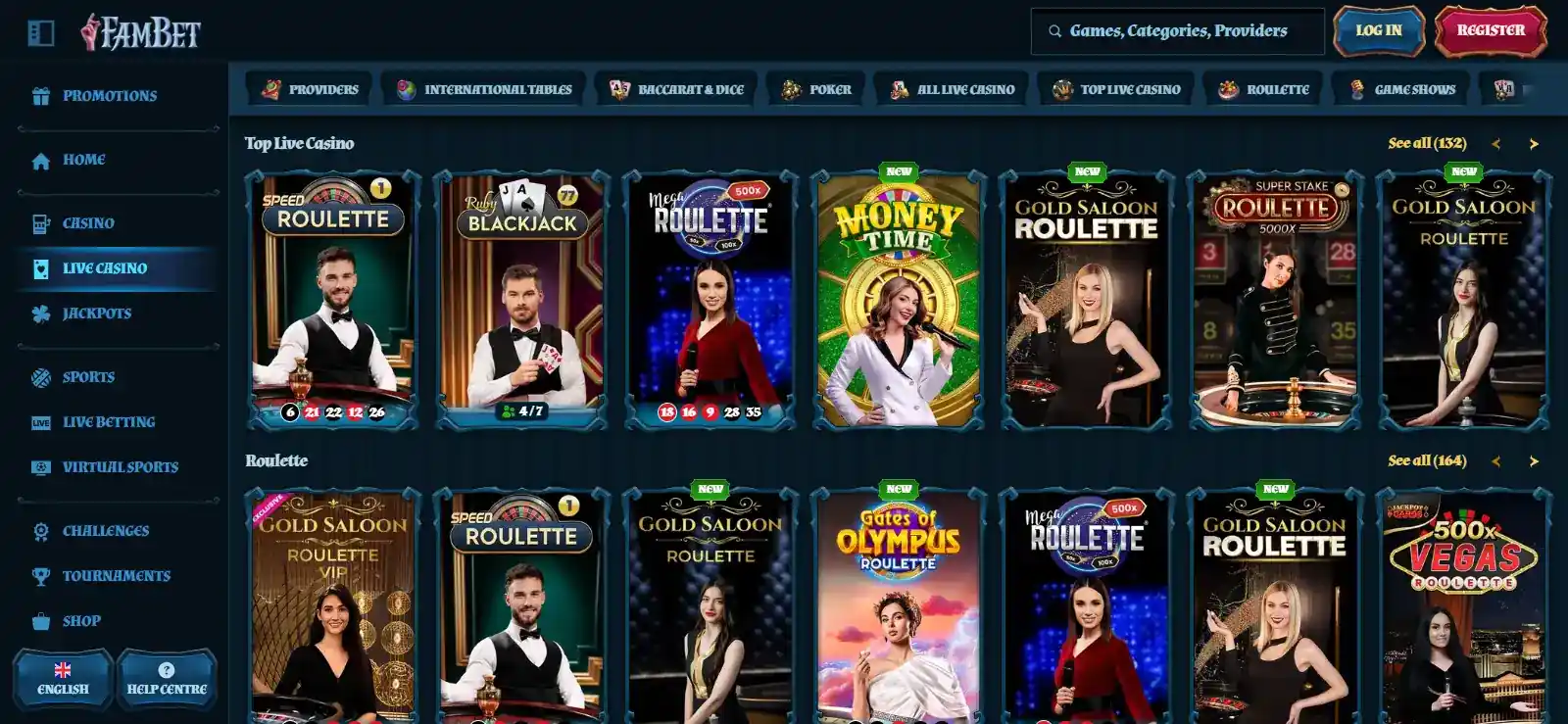
A focused look at FamBet live casino, including verified blackjack, roulette and baccarat categories, mobile…

See how American Roulette differs from single-zero games, how its table and bets work, and…


The word “bonus” can also be misleading if it is taken to mean that every player reaches the same point or receives an additional prize. The qualification requirement is a condition for proceeding, while Top Up is described as an option to add to prizes. Those are distinct functions.
How the UK rules relate to online play
In Great Britain, remote gambling offered to consumers is regulated by the UK Gambling Commission, regardless of where an operator’s key equipment is located. The Commission is the sole regulator for commercial gambling in Great Britain. It issues operating licences to businesses and personal licences to individuals working in regulated roles. A casino game offered online therefore sits within a broader licensing framework; the presence of a familiar television title does not replace the need for the operator to meet the applicable rules.
Online gambling is legal in the UK for adults aged 18 and over when it is provided by an operator holding a UK Gambling Commission licence. Operators must verify a customer’s age before allowing funds to be deposited into a gambling account. A game’s qualification stage is not an age check and does not alter that requirement. The Gambling Act 2005 governs gambling in England, Wales and Scotland, while Northern Ireland has a different legal framework.
UK Licensing
Online gambling is legal in the UK only for adults aged 18 and over when provided by an operator holding a UK Gambling Commission licence.
For online slots, the rules also constrain how play is presented. Autoplay is prohibited in Britain, and at least 2.5 seconds must pass from the start of one game cycle before another can begin. The maximum stake in a slot game cycle is £2 for customers aged 18 to 24 and £5 for customers aged 25 or older. These limits apply to the total stake in a cycle, rather than being a feature of the Deal or No Deal qualification condition.
Account safeguards form another part of the regulated environment. Remote operators must prompt new customers to set a financial limit before their first deposit and make account-level limit controls accessible. UK-licensed casinos must also provide responsible-gambling tools, including self-exclusion. These measures concern the conditions under which online gambling is offered; they do not change the game’s three-ring qualification rule or make Top Up compulsory.
Payment restrictions apply as well. UK-licensed casinos cannot accept credit-card payments for gambling, including credit-card funding routed through a money service business. They also cannot accept wallet payments where the wallet permits credit-card funds to be used for gambling. These restrictions are relevant to real-money casino play generally, not a special condition of this particular game.
The qualification and bonus flow can therefore be described without assuming that every online version reproduces the television programme. Licensing and safer-gambling requirements govern the surrounding online service, rather than serving as additional steps within that sequence.

Banker Offers, Decisions and the Final Briefcases
In the casino bonus game, the Banker’s offers create decision points as play progresses. After batches of briefcases have been opened, an offer is made, and the player can either accept it or continue. This gives the bonus a repeated choice structure: stop with the offered amount, or leave that offer behind and proceed to the next part of the game.
There are four Banker offers before the final stage. Each one arrives after a group of briefcases has been opened, rather than at an arbitrary point in the sequence. The opened cases form the immediate context for the decision, while the offer sets out an amount that can be taken by ending the game. Continuing means declining that amount and moving on through the bonus.
Acceptance has a clear consequence: the game ends, and the player collects the amount offered by the Banker. It is not a choice to bank the offer while continuing to play. Once an offer is accepted, there is no later stage in that game in which another offer or a final briefcase choice can be made. The decision therefore separates an early exit with the accepted amount from continued play.
Rejecting an offer does not itself end the game. Instead, play carries on towards the next decision point, where further briefcases are opened and the Banker can make another offer. This pattern is repeated before the final stage. The sequence makes the offers consequential, but it does not establish that any particular offer is preferable: that depends on the values and terms in the game, not on the existence of the offer mechanism alone.
Bonus Decision Flow
Groups of briefcases are opened to set the immediate context for the decision.
The Banker makes an offer based on the remaining cases.
The player either accepts the offer to end the game and collect the amount, or rejects it to proceed to the next stage.
This structure is related to the familiar Deal or No Deal premise, but it should not be treated as a complete reproduction of the television programme. The televised format has its own contestant and host, and the casino bonus proceeds through its game interface. The shared idea is the choice between a Banker’s offer and continuing with unopened cases. The order and consequences described here concern the bonus game, not a live studio decision.
The final choice
The final stage follows the four Banker offers. Before the remaining two briefcases are opened, the player can switch between them. This is a separate decision from accepting or rejecting an offer: the switch concerns which of the two unopened cases is selected, whereas accepting an offer ends the game and awards the offered amount.
The timing matters. The switch is available while both cases remain unopened, so the choice is made before their contents are revealed. Once that point has passed, there is no longer a choice between two unopened briefcases.
That distinction is useful when interpreting descriptions of a Deal or No Deal online slot or casino bonus. An offer decision and a briefcase switch are not interchangeable actions. The former determines whether the game stops for the Banker’s amount; the latter changes which of the final pair is selected before opening. In both cases, the action occurs at a defined point in the bonus sequence.
The final pair also marks a different kind of decision from the earlier offers. Before that stage, the player encounters Banker offers after batches of cases have been opened. At the end, the choice is between the remaining briefcases, with the option to switch before they are revealed. The game’s sequence therefore moves from repeated offer decisions to a final selection decision.

These mechanics describe the decision flow, not a strategy for choosing. Nor does the presence of several offers show that later offers will be larger, or that continuing will produce a better outcome. Such conclusions would require details about values and probabilities that are not part of the mechanics described.
For anyone comparing Deal or No Deal slots online, the name alone should not be taken as evidence that every title follows this exact sequence. The relevant mechanics are the ones attached to the particular game being played.
What Free-Play and Demo Searches Can—and Cannot—Establish
A request for a Deal or No Deal slot demo points to a particular kind of experience: seeing or using a game without treating the play as a real-money wager. The wording alone, however, does not identify a specific game, establish that a playable version exists, or show how it would work. The same distinction applies to references to free play. A label can express what someone is looking for without confirming that a particular title offers it.
The terms also do not define the experience in enough detail to support assumptions about its features. They do not establish whether a version would be interactive, whether it would reproduce the full game, or whether its presentation would match a real-money version. Nor do they show whether any results, progress or choices in a non-wagering setting would carry over elsewhere. Those are separate properties, not consequences of calling something a demo.
A request for a slot demo or free play expresses an interest in a non-wagering experience but does not confirm that a playable version of a specific title exists.
This matters for a title associated with Deal or No Deal, because the name can describe a theme or format rather than a single, uniquely identified casino product. A result that uses the title does not, by itself, settle which game is meant. Adding a format term such as Megaways narrows the intended description, but still does not establish that a matching game is available in demo or free-play form. The format label and the play mode are distinct claims.
The phrase “free slot game” can be especially ambiguous. It may signal an interest in playing without a stake, but it does not specify whether the request concerns a trial mode, a browser-based game, or another kind of free access. Those possibilities should not be treated as interchangeable. Without a clearly identified title and mode, the phrase cannot establish the rules, interface or scope of any particular experience.
A meaningful description of a demo would therefore need to identify the game and state what the mode permits. It would also need to distinguish non-wagering play from real-money play rather than relying on a broad label. If a page uses “demo” or “free play” without making that distinction clear, the wording does not answer basic questions about what is actually being offered. It should not be read as evidence of a complete or equivalent version of the game.

The same caution applies when the game name is combined with “Megaways”. That wording expresses interest in a particular format, but it does not establish a product’s identity or its availability in a non-wagering mode. A named format should not be used to infer mechanics or access conditions that have not been stated for the specific title.
For readers comparing descriptions, the useful distinction is between a stated mode and an assumed one. A clear product description can say whether it refers to a demo, free play or real-money play and identify the game to which that description applies. Without those particulars, a phrase combining Deal or No Deal, Megaways and free play remains a description of an intended search, not proof of a playable offering.
Bonus Offers and Named Slot Variants: Evidence Limits
A no-deposit bonus is a separate promotional offer, not an inherent feature of a game title. Whether such an offer applies depends on the terms published by the UK-licensed operator making it. Without those terms, eligibility, restrictions and any associated conditions cannot be stated. The presence of a game name beside a bonus phrase does not establish that a promotion exists or that it can be used with that game.
This distinction matters because promotional wording can suggest a connection that has not been demonstrated. A casino may advertise an offer separately from its game catalogue; a search result or title pairing alone does not show that the offer covers a particular game. In Great Britain, remote gambling operators serving consumers must hold a UK Gambling Commission licence. That regulatory requirement does not, by itself, establish the availability or terms of any particular promotion.
Attention: The presence of a game name beside a bonus phrase does not prove that a promotion exists or that it can be used with that specific game.
The same caution applies to searches combining Deal or No Deal with a Golden Box or Megaways label. Those words may point towards a named slot variant, but a label alone does not establish the product’s availability, provider, rules or relationship to the televised format. No specific mechanics should be inferred from the wording.
Double Action searches raise a similar distinction. The phrase may be used to identify a variant or casino listing, but it does not establish that a particular version is offered in the UK, or how it plays. Nor does the word “slot” supply enough information to describe its features. Any account of a specific title would require reliable product information rather than an interpretation of its name.
Accordingly, promotional claims and game descriptions need to be evaluated separately. An operator’s published terms are the relevant basis for understanding an advertised bonus; the game’s own rules or help information are needed to establish its mechanics. Neither can be inferred from a combined title-and-bonus phrase.
Free Spins and Box Clever Searches
Free spins and a named slot variant raise separate questions. A free-spin offer concerns a promotion attached to play; Box Clever refers to a title whose rules and features would need to be established independently. The presence of either phrase in a game’s name or promotional wording is not enough to show what is available or how it works.

No confirmed free-spin offer can be described for Deal or No Deal casino games. In particular, there is no basis for stating which game would be included, who could qualify, or what conditions would apply. Those details matter because a promotion’s label alone does not explain its scope. Without published terms, it would be misleading to infer that free spins are currently offered or to describe them as a standard feature.
The same restraint applies to Box Clever. The title does not, by itself, establish whether it is a slot, how its rounds operate, what symbols or bonus features it contains, or whether it is available in the UK. None of those points can be inferred from the words “Box Clever” or from their association with Deal or No Deal.
This distinction helps keep promotional claims separate from game descriptions. A free-spin promotion, if one is offered, would have its own terms; a named game would have its own rules and paytable. Neither can be used as evidence for the other. In the absence of substantiated details, claims about a Box Clever game’s mechanics or a Deal or No Deal free-spin promotion remain unconfirmed.
Accordingly, the title and promotion should not be treated as interchangeable routes to a known feature. A precise account would require reliable information identifying the game or offer and setting out its applicable details. Without that, no specific free-spin entitlement or Box Clever feature can responsibly be attributed to the UK market.
- Verify a game’s rules through its own help files
- Check the operator’s published terms for bonuses
- Infer game mechanics from the title alone
- Assume free spins are a standard feature
What’s in Your Box: The Verified Return Figure
For What’s in Your Box, an affiliate review reports that the game’s help files give an expected return of 95.42%. This is the specific return figure associated with the named game; it should be read as a reported value, not as a guarantee of what an individual session will produce.
An expected return is a statistical measure of a game’s projected payouts over extended play. It does not predict the result of a single round or establish how much a particular player will receive. Individual outcomes can differ from the stated figure, and the measure does not describe the sequence or size of results in any one session.
The distinction between a published return and a personal result matters when assessing the title. A percentage can summarise an expectation across repeated play, but it cannot determine whether a particular session ends above or below the amount staked. Nor does the figure, by itself, explain the game’s rules, bonus flow or any other feature.
The 95.42% figure is therefore best treated narrowly: it is the expected return reported for What’s in Your Box in an affiliate review’s account of the game help files. It should not be taken as a general return rate for Deal or No Deal games, or as evidence about other titles using the same branding. No comparison between variants follows from this single figure.

This return measure is also separate from promotional terms or the availability of a particular version. It describes an expected game return, not a bonus, a player-specific payout or a promise of recovery. Its practical meaning remains statistical rather than predictive: it provides a stated expectation for the game, while leaving any individual outcome uncertain.
Review Searches for Double Action and What’s in Your Box
A review of Deal or No Deal Double Action and What’s in Your Box needs to distinguish a title from a description of play. The names alone do not establish how either game works. They cannot show what triggers a feature, how rounds are structured, what choices are available or how prizes are determined. Treating a suggestive title as proof of a particular mechanic would turn an assumption into a review finding.
The same limit applies to other comparison points. A sound assessment of either game would need information about its rules, interface, volatility, stake options and any bonus features. Without that detail, there is no reliable basis for describing one title as more interactive, more volatile or better suited to a particular playing style. Nor can a comparison establish that the two games share the same format simply because both use the Deal or No Deal name.
What’s in Your Box has a separately stated expected-return figure in game help files. That figure is a specific attribute, not a substitute for a broader review: it does not explain the game’s mechanics or establish how it compares with Double Action. A return figure should therefore be kept separate from claims about entertainment, features or the likelihood of a particular outcome.
Reviewing Casino Variants
- Game titles do not establish specific triggers, structures, or prize determinations.
- Expected return figures are statistical measures, not guarantees for individual sessions.
- Reliable reviews require product-specific rules and help material rather than inferences from branding.
For Double Action, the title itself is not enough to support a description of its rules or features. The same restraint applies to What’s in Your Box beyond the return information stated for it. A useful review would need to identify the game version and draw on its own rules or help material, rather than infer details from the name or from another Deal or No Deal title. Until those distinctions are clear, conclusions about either game’s play experience would go beyond what can be responsibly stated.
Perfect Play: No Verified Game Details
“Perfect Play” may appear alongside Deal or No Deal in references to casino slots, but the wording alone does not establish what the title denotes. It cannot show whether the name refers to a distinct game, a feature, or a label used in a particular listing. Those distinctions matter: a title is not a description of a game’s rules.

No specific gameplay can therefore be attributed to a Deal or No Deal slot called Perfect Play. The name does not establish how a round begins, what symbols or decisions are involved, whether a bonus feature exists, or how any outcome is determined. Nor does it establish a connection between a particular product and the television format. Treating the phrase as evidence of those features would go beyond what the name supports.
The same caution applies to claims about where the title can be played. A search result, catalogue entry or promotional reference would need to identify the actual product and the operator offering it before its status could be assessed. The wording itself does not show that a game is currently available to UK players, or that it is offered for real money or free play.
For a UK player, the relevant regulatory distinction is between an operator holding a UK Gambling Commission licence and one outside that system. The Commission regulates remote gambling offered to consumers in Great Britain, regardless of where an operator’s key equipment is located. That licensing context does not, by itself, confirm the identity or mechanics of a game bearing the Perfect Play name.

Consequently, the title is not enough to support a review, comparison or account of play. Any description that assigns it particular rules or features would require product-specific evidence. Without that identification, the most reliable account is limited: Perfect Play is a name associated in some contexts with Deal or No Deal slot searches, not a confirmed set of game details.
Free Online Games: Availability Is Not Established
“Free online” can describe different arrangements, and the label alone does not identify how a Deal or No Deal-themed casino game is accessed or played. It should not be taken as proof that a particular title can be launched without payment, or that a free version is offered in the UK. Nor does it establish whether a game is a standalone product or part of a wider casino service.
The distinction matters because a no-cost label does not, by itself, explain what happens during play or whether any real-money gambling is involved. A description of a game’s theme is also not evidence of its availability. The name Deal or No Deal may refer to the familiar television format, while casino products bearing that name need not reproduce the show’s structure exactly.
Where an online casino offers real-money gambling to customers in Great Britain, the operator must hold the relevant UK Gambling Commission licence. That requirement concerns the operator and its gambling service; it does not establish that a free online version of a named game exists. Legal status and product availability are separate questions.
Accordingly, the broad interest in free online Deal or No Deal games cannot be answered by assuming that a particular slot or casino game is available at no cost. A product listing would need to identify the game and clearly state the access conditions before its free availability could be assessed. No general claim about such availability follows from the game name alone.
Published by the fam bet Casino team.