Keno Online Casinos in the UK: Rules and How to Play
 Available in GB
Keno draws numbers at random from a card of 1 to 80, while outcomes depend on the spots selected and each game’s rules.

Table of Contents
- How Online Keno Works
- Keno at Online Casinos: Rules, Paytables and the House Edge
- Assessing Keno Casino Options Without a Ranked List
- Keno Games Presented as Slots
- Trying Keno for Free Before Wagering
- Licensed Keno and Live Draws in Britain
- Keno Bonuses, Payout Variability and Risk
- Keno Availability and Repeat-Play Formats
- Stakes and Budgeting for Real-Money Keno
- Number Choices, Side Bets and Keno Variants
How Online Keno Works
Keno is a draw-based game built around a numbered card, a set of player selections and a random result. In an online round, the card displays numbers from 1 to 80. Before the draw, a player marks a group of numbers, often called spots. The game then selects numbers at random, and the round is settled by comparing the draw with the marked spots.
The permitted number of selections is determined by the particular game. Some versions allow a choice of up to 10 spots, others up to 15 or 20. This means that the same basic keno casino game can involve different-sized selections depending on its rules. The card’s full range remains distinct from the smaller group a player chooses: the draw is made from the card, while the selected spots form the basis for judging the result.
Online keno uses a random number generator to produce the draw. The selection is therefore not a sequence that can be inferred from previous rounds, nor is it affected by which spots players have marked. Each result is generated at random. Once the draw is complete, the game identifies which selected spots were caught—that is, which ones also appeared among the drawn numbers.
Choosing a UK casino for online keno involves more than the game itself, so payout timing is one practical detail to consider. This list gives a brief reference point for that detail.
Payout speed: 1-3 business days Jetsetspins lists a payout speed of 1–3 business days.
Payout speed: 1-3 business days WinBeast lists a payout speed of 1–3 business days.
Payout speed: 1-3 business days NightLuck lists a payout speed of 1–3 business days.
Payout speed: 1-3 business days x3bet lists a payout speed of 1–3 business days.
Payout speed: 1-3 business days Zombillion lists a payout speed of 1–3 business days.
Payout speed: 1-3 business days BeOnBet lists a payout speed of 1–3 business days.
Payout speed: 1-3 business days SlotoSport lists a payout speed of 1–3 business days.
Payout speed: 1-3 business days Chanze lists a payout speed of 1–3 business days.
Payout speed: 1-3 business days SpinFormula lists a payout speed of 1–3 business days.
Payout speed: 1-3 business days EvoSpin lists a payout speed of 1–3 business days.
The number of catches determines the result in relation to the game’s rules. A round in which several selected spots appear is treated differently from one with fewer matches; the precise consequence depends on the game. The central mechanic is the comparison itself: player selections on one side, randomly drawn numbers on the other. A selection does not change the draw, and the draw does not depend on a pattern in the card.
This structure helps distinguish keno from games in which a player acts during a sequence of events. In a standard online round, the relevant choices are made before the draw. The result follows when the random selection is compared with the spots already marked. Although interfaces can differ, the numbered card, prior selection and draw remain the basic elements of online keno games.
A keno round can therefore be understood without treating the card as a prediction tool. Marking a particular number simply includes it in the group that will be checked against the draw. If it appears, it counts as a catch; if it does not, it contributes no match. No position on the card makes a spot more likely to be drawn.
The term “keno casino game” covers games that share this draw-and-match format, but it does not imply identical rules across every version. The number of spots available for selection can vary, and the result is assessed under the specific game’s structure. The common thread is narrower: a player selects spots from a card numbered from 1 to 80, a random draw takes place, and the outcome depends on how many selected spots appear in it.


Understanding those mechanics is the starting point for reading any particular version. The card shows the available numbers, the selection defines which ones count as the player’s spots, and the random draw supplies the result. That sequence explains how a round works; the game’s own rules determine what each matching total means.
Keno at Online Casinos: Rules, Paytables and the House Edge
Keno may follow a familiar draw format across online casinos, but the financial terms are not uniform. Each game sets its own rules and paytable, so the same pattern of spots caught can produce different payouts on different platforms. The paytable is therefore central to understanding what a result is worth; the game’s name or appearance alone does not establish its likely return.
A paytable maps possible outcomes to their stated prizes. It should be read alongside the rules that explain how a result is classified and which conditions apply. A displayed prize is not a promise that it will be won, nor does it describe the overall cost of playing. It applies to a particular outcome under that game’s rules. The range of possible outcomes and the amount paid for each need to be considered together.
What the house edge describes
The house edge expresses the mathematical advantage retained by the game over repeated play. It is not a deduction from every individual bet, and it does not predict the result of a single round. A player may receive a payout, lose a stake, or experience a sequence of either; randomness governs each outcome. Over time, however, the house edge indicates why the game is not designed to return all wagered money to players.
House Edge
Keno should be approached as a game with a house edge of 25% or more, which is a material disadvantage that cannot be overcome by betting systems.
Keno should be approached as a game with a house edge of 25% or more. This is a material disadvantage, not a figure that can be overcome by selecting a particular set of spots or following a betting system. No strategy guarantees a win. A short run of favourable results would not alter the underlying terms, and an unfavourable run would not make a win due in the next draw.
A specialist review has reported keno house-edge estimates ranging from 5% to 40%, with the stated figure depending on the casino. That broad range is a source-specific estimate rather than a uniform measure for every game. It should not be treated as evidence that a particular online keno game offers the lower end of the range. The relevant figure, where supplied, must be tied to the specific game and its rules; the general warning remains that keno carries a substantial house edge.
Why paytables are not interchangeable
Differences in payout structures affect the relationship between possible matches and potential prizes. A game may award amounts differently from another even when both use the keno label. The rules determine which outcomes qualify, while the paytable sets out what those outcomes pay. Consequently, results cannot be compared solely by looking at a headline prize or by assuming that similarly named games share identical terms.
A paytable also needs to be interpreted as a schedule of possible outcomes, not as a forecast. Larger listed prizes do not establish that a game is more favourable overall: the likelihood of the relevant outcome and the rest of the payout structure matter as well. Without considering both, a visible top award can give an incomplete impression of the game’s financial characteristics.

Before wagering, the specific game’s paytable, rules and odds should be checked. This is necessary because the terms vary between platforms, and general descriptions of keno cannot substitute for the details attached to an individual game. If those details are unclear, the apparent payout figures alone do not provide a sound basis for estimating the game’s value.
Return is not a guaranteed result
The house edge and a game’s stated payouts describe different aspects of play. The paytable identifies what may be paid for particular outcomes; the house edge describes the game’s mathematical advantage across repeated play. Neither promises a particular return to an individual player. In particular, a theoretical or published return should not be read as a guaranteed amount, a minimum payout, or a prediction for a short session.
Random outcomes can produce variation around any long-run mathematical expectation. That variation does not disprove the house edge, just as a winning result does not establish that the game is favourable. The distinction matters because a payout on one round is evidence only of that outcome, not of a reliable pattern or future result.
For online casino keno, the most defensible comparison begins with the exact rules and paytable of the game under consideration. Terms can differ across platforms, and there is no universal payout schedule that applies to every version. A careful reading can clarify the conditions and possible prizes, but it cannot remove the house edge or make random results predictable.
Theoretical or published returns should not be read as guaranteed amounts, minimum payouts, or predictions for a short session.
Assessing Keno Casino Options Without a Ranked List
A useful comparison of keno casinos starts with the game’s terms, not a league table. A platform’s name or presentation does not establish that its keno offers better value. Rules, betting arrangements and payout structures can differ, so comparisons need to be made game by game.
The paytable is central. It shows how payouts correspond to the game’s possible results, and should be read alongside the rules and stated odds. A return-to-player figure, where published, is meaningful only when it applies to the specific game and its particular payout structure. Figures from different games or platforms should not be treated as directly comparable without checking what each one measures. Payouts vary across platforms; there is no single keno payout schedule that can be assumed to apply everywhere.
An affiliate review notes that betting and payout structures differ between online casinos. That observation supports checking each game’s terms rather than relying on a general description of a casino. Before wagering, the relevant checks are the specific game’s paytable, rules and odds. A headline return figure or broad claim about a site is not a substitute for those details.
The house edge also matters when assessing value. Keno has a house edge of 25% or more, so the possibility of a prize should not be confused with an expectation of profit. A published return figure describes a mathematical feature of a game, not a guaranteed result for an individual player. Differences in paytables may affect the distribution of outcomes, but do not remove the underlying risk.

Searches for the best keno casino apps in the UK raise a related comparison issue: an app is a way to access a platform, not evidence about the terms of its keno games. The relevant information remains the game-specific rules, odds and payouts. The same caution applies to crypto-based keno services. Payment method or branding cannot establish the quality of a paytable, and an offering should not be assumed to be suitable for British players simply because it is accessible online.
A ranked list would imply a stable basis for ordering options, but the available comparison points are specific to each game and platform. A more reliable assessment separates what can be checked from what cannot be inferred. Published rules and paytables can be compared; a claim that one casino is “best” requires a defined measure and evidence that the options have been assessed on the same basis. Without that, rankings risk presenting a broad impression as a measurable conclusion.
For anyone comparing keno options, the practical standard is therefore straightforward: identify the exact game, examine its paytable and rules, and check its stated odds before placing a wager. Where these details are unavailable or unclear, the platform cannot be assessed reliably on keno value.
Keno Games Presented as Slots
The phrase “keno slot” can suggest a game that combines features of keno with the presentation of a slot machine. The label alone, however, does not establish how a particular game works or what its payouts are. Video keno is a distinct format for comparison: its odds are about as unfavourable as those of slot machines. That broad comparison is relevant to expectations, but it does not mean the two types of game have identical rules or outcomes.

A slot-style appearance is not a reliable guide to the underlying odds. Nor does calling a game a keno slot establish that it uses a particular paytable, offers a specific bonus, or follows the same structure as another game with a similar name. Those details depend on the individual game. In practice, the game’s rules and paytable are more informative than a label that groups it with slots.
The comparison with slot machines is best understood as a warning against assuming that video keno offers favourable odds simply because it is presented differently. The available comparison supports a general point about the odds, not a claim that every keno game and every slot has the same mathematical profile. Slot games themselves can differ, and keno games can also differ. A shared category label cannot settle the conditions of a particular game.
This distinction matters when considering keno presented in a slot-style format. The visual treatment may shape expectations, but it does not by itself show whether a game is more generous, easier to win, or more predictable. A description such as “slot machine keno” is not a substitute for examining the game’s own information. The relevant details are the rules, the payout structure and the odds stated for that specific offering.
The same caution applies to references to keno slot payouts. The wording may sound as though there is a standard payout model for this category, but the label does not supply one. A payout cannot be inferred from a game’s name or from a comparison with slot machines. Even where two games use similar terminology, their conditions may not be interchangeable. A careful assessment therefore treats each game as its own case rather than assuming that a broad format name guarantees comparable returns.

The comparison also does not make video keno a way to avoid the unfavourable odds associated with slot play. It indicates that the odds in video keno are broadly as poor as those in slot machines. It should not be read as a promise about the result of any particular round, nor as proof that every game offers the same chance of a payout. The comparison is useful at a general level; it cannot replace the information attached to the individual game.
Bonuses do not change what can be concluded from the format label alone. A reference to a keno bonus does not show that an offer applies to a particular game, or explain how it affects the conditions of play. Any bonus terms would need to be considered separately from the underlying game. Without those details, it would be inaccurate to treat a slot-style presentation as evidence of an added benefit.
For the same reason, searches for online keno slots or keno slot machines should not be treated as a precise description of a single game type. They may refer broadly to digital keno presented alongside slot-style products, but the wording does not identify a common set of rules or a standard payout. The meaningful comparison remains limited: video keno has odds about as bad as slot machines, while the exact conditions depend on the individual game.
Attention Video keno odds are broadly as poor as those in slot machines; a slot-style presentation does not imply more favourable odds.
A sound evaluation separates appearance from mathematical information. The slot-like label may help describe how a game is positioned, but it cannot establish its odds or payout terms. Those claims require game-specific information, and the general comparison with slot machines should not be stretched into a claim that the products are identical.
Trying Keno for Free Before Wagering
Free-play options provide a way to become familiar with a keno game before staking money. Two forms are available: a demo version of a game, or a social casino that offers online games using play money. Neither requires a real-money wager to try the game.
A demo can show how a particular version is presented: where number choices appear, how a round is started and how the result is displayed. This can make the interface easier to understand before any financial decision is involved. A social-casino version offers another setting in which to explore keno, using play money rather than a cash stake.
During a trial, number selection can be explored manually or through an automated random-selection option, where the game provides the choices. Trying both can clarify how the controls work without suggesting that one method improves the result. The draw remains random; practising does not make future outcomes predictable.
Free play is useful for learning the sequence of actions and becoming comfortable with the game’s layout. It is not evidence that a real-money version will feel identical or produce the same experience. Demo and social-casino play should therefore be treated as familiarisation, not as a test of likely winnings or a way to establish a winning system.
The distinction matters when moving from free play to wagering. A trial does not establish whether a particular game is suitable for real-money play, nor does it show that results in a later session will follow a pattern observed during practice. Any understanding gained is limited to the features visible in the version being tried.
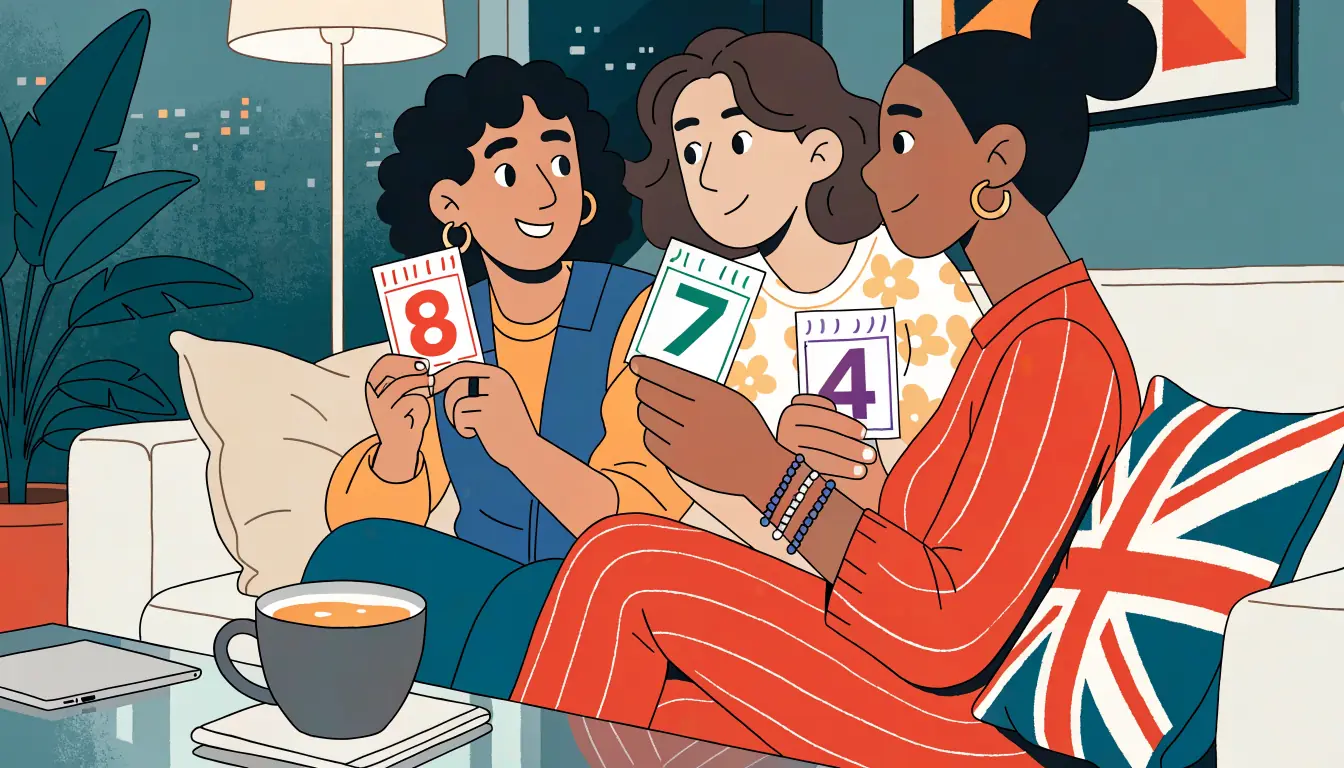
For someone learning how to play keno online, a free version can help answer practical questions: how to make a selection, how automated choices work, and what information the screen shows after a round. These are interface questions, not predictions about future results. The same approach applies to keno presented within casino games, including slot-style versions, where a demo may help clarify the controls but does not turn play into a reliable forecast.
Free keno is thus best understood as a low-pressure introduction to a game’s operation. It can reduce uncertainty about navigation and selection before money is at stake, while leaving the central uncertainty of random outcomes unchanged.
Licensed Keno and Live Draws in Britain
For keno offered for real money to customers in Great Britain, the operator must hold the relevant operating licence from the UK Gambling Commission. This requirement applies whether the company is based in Britain or elsewhere. A UKGC licence is therefore central to assessing whether an online casino is authorised to serve the British market; a foreign location alone does not remove the licensing requirement. The Gambling Act 2005 governs gambling in England, Wales and Scotland, while Northern Ireland has a separate legal framework.
Legal online gambling in the UK is restricted to licensed and regulated sites, and play is for people aged 18 and over. Operators must verify a customer’s age before allowing a deposit. New customers must also be prompted to set a financial limit before their first deposit, with account-level controls available for managing limits. These measures concern the gambling account as a whole, rather than the mechanics of a particular keno game.
A licensed casino must also provide responsible-gambling tools, including self-exclusion. If a dispute arises, UKGC licensees must have an internal complaints process and access to an approved Alternative Dispute Resolution service. These protections are relevant when comparing claims about licensed keno casinos: licensing is not a promise of winning or a guarantee that every game has identical terms, but it does place the operator within the British regulatory system.
The phrase “live keno” can refer to a format presented as a live draw, whereas online keno can also determine results through a random number generator. Online RNG keno does not require a presenter or a physical draw to produce its result. A live presentation and an RNG-based game should therefore not be treated as interchangeable descriptions; the game rules should make clear how results are generated.
The label “live” by itself does not establish how a game works or what safeguards apply. For real-money play, the relevant questions remain whether the operator is licensed for the British market, whether age and account controls are in place, and what the game’s rules say about its draw. That distinction helps separate a live-draw claim from the general availability of online keno, without assuming that every licensed casino offers the same format.
Keno Bonuses, Payout Variability and Risk
A keno bonus may appear attractive, but its presence does not establish what games it covers or how any associated winnings are treated. No particular bonus, including a no-deposit offer, can be assumed to be available. The relevant terms should be read before an offer is treated as part of a game’s value; a headline description alone cannot show whether it changes the underlying odds or payout structure.
Keno carries a house edge of 25% or more, so the expected return is not equal to the amount wagered over time. This is a statement about the game’s mathematical disadvantage to players, not a prediction of the result of an individual round. A win can occur, but neither a bonus nor a short run of results removes the house edge or guarantees a profit.

A specialist review has reported keno house-edge figures ranging from 5% to 40%, with the figure depending on the casino. That range should be treated as a report from that source, rather than as a fixed measure for every platform. The practical point is that the edge can differ substantially, and a general description of keno cannot establish the return of a particular game.
Keno payouts also vary between platforms. A given selection and result may therefore correspond to different payments under different games. Before wagering, the specific game’s paytable, rules and odds should be checked together. The paytable shows the prizes for possible results; the rules explain how those results are determined, and the odds help indicate how likely the relevant outcomes are. Looking at a headline prize alone does not describe the full distribution of outcomes.
The same caution applies when a casino promotes keno alongside other gambling products or accepts digital currencies. Payment method does not establish that a game has better odds, lower risk or more favourable payouts. Any such comparison depends on the particular game’s published terms and figures.
A bonus may change the amount available to play with, but it does not by itself make keno a lower-risk activity. Where the payout table or odds are unclear, the likely return cannot be assessed reliably. That uncertainty matters because keno’s results are random while the house edge remains in the operator’s favour. A careful comparison therefore rests on the individual game’s published paytable, rules and odds, rather than on promotional wording or the payment method.
Keno Availability and Repeat-Play Formats
Keno can appear within an online casino as a standalone game or as part of a wider selection of casino games. The label alone does not show how a particular version is presented: the game may use a single-card format or offer repeat-play controls alongside each round. Those differences affect how play is arranged, but do not alter the basic role of the draw.

A separate question is whether a game is described as live keno. That label concerns the format of the draw, whereas an online game can instead use a random number generator. The distinction matters when comparing what is offered: the presence of keno in a casino’s game menu does not, by itself, establish that it has a live-draw option. Nor does the word “casino” identify a particular game format. Specific rules and presentation depend on the game.
How multi-race play works
A multi-race card allows the same spots to be carried across consecutive keno games. Rather than selecting spots again for each round, the player’s selection is reused for the chosen run of games. The format therefore changes the sequence of play, not the underlying result of any individual draw.
Reusing a selection does not improve the chance of catching a spot. Each game still has its own outcome, and the same set of spots can produce different results across successive rounds. A run of games may make repeat play more convenient, but it does not turn a selection into a more likely winner or create a guaranteed return.

The distinction between a single game and a multi-race option is consequently practical rather than strategic. A player considering the latter needs to understand how many consecutive games the card covers and how the stake applies across them; those terms are specific to the game. The label “multi-race” alone does not establish the cost or precise conditions.
Availability also should not be inferred from a general description of online keno. Casino menus and game formats can differ, and a reference to keno does not establish that every format is offered. For a real-money game, the relevant details are those shown for that game, including its rules and paytable. Multi-race play is best understood as a way of repeating a selection, not as a method of changing the odds.
Stakes and Budgeting for Real-Money Keno
Real-money keno involves deciding not only which game to play but also what amount can be spent without disrupting other financial commitments. A specialist review reports a £1 minimum stake, but this should be treated as a reported entry point rather than a price that applies to every online casino keno game. Stake options can differ, so the relevant question is whether a game’s available bets fit the player’s budget.
- Set a budget before the session begins
- Use money that does not affect essential costs
- Select games with stakes compatible with your budget
- Stop playing once the affordable spend is reached
- Treat a budget as a target to use in full
- Increase stakes to recover previous losses
- Assume winnings guarantee future profit
- Add funds in response to losses
A budget is most useful when set before a session begins. It should represent money that can be spent without affecting essential costs, and it should be treated as a firm limit rather than a target to use in full. Deciding in advance how much is affordable helps make the cost of real-money play explicit. If that amount has been reached, continuing to stake money would exceed the original plan.
Loss-chasing undermines this boundary. A previous loss does not make a later round more likely to produce a win, and increasing stakes to recover money can expose a player to further losses. Keno outcomes remain uncertain; a budget does not change them, but it can limit the amount at risk. The same principle applies when a session has gone well: winnings do not establish that subsequent play will be profitable.
The selected game should therefore offer stake levels compatible with the planned spend. If its minimum or available bet sizes do not fit that range, choosing another game—or not wagering—is more consistent with the budget than stretching it. The stake per round also needs to be considered alongside how often rounds are played, since repeated bets can use the planned amount faster than a single stake suggests.
In Great Britain, remote gambling operators must prompt new customers to set a financial limit before their first deposit and provide accessible account-level limit controls. These controls can support a spending plan, but they do not replace setting a personal budget or stopping when it has been reached. The account limit and the amount intended for a particular keno session are not necessarily the same decision.
A cautious approach is to define the affordable spend in advance, select a game whose bets remain within it, and avoid adding funds or raising stakes in response to losses. This keeps real-money keno within a chosen financial boundary without treating any stake size as a means of improving the chance of a win.

Number Choices, Side Bets and Keno Variants
Number selection is a feature of the game, not a method of influencing its result. In legitimate keno, choosing particular spots does not change which numbers the random draw produces. Manual selection and automated random picks therefore offer different ways to fill a card, but neither gives a player an advantage over the other. Claims that “hot” or “lucky” numbers improve the chance of catching a spot are not supported by the game’s random mechanism, and no number system guarantees a win.
Variants can alter what counts as a winning outcome. Many keno variants include a reward for matching no spots when the player has selected more than a specified number. This is a rule of a particular game, not a general feature that can be assumed across all versions. The relevant threshold and the payment for a zero-match result need to be read from that game’s rules and paytable.

Optional side bets may also appear. A specialist review reports that some games offer side bets such as multipliers, but this should not be taken to mean they are available across the market. A multiplier can change the potential payout, while a side bet can also change the amount at risk. Its conditions, cost and effect on settlement should be clear before it is added to a wager.
These distinctions matter whether keno is played as a conventional card game or in a slot-style presentation. The format does not make number choices predictive, and visual features should not be confused with a strategy. Before wagering, the specific game’s rules, paytable and odds should be checked; payouts vary between platforms. Keno also carries a house edge of 25% or more, so a feature that offers an additional possible reward does not establish a reliable return.
A clear comparison separates three things: the spots selected, the variant’s rules for matching or missing, and any optional side bet. Only the rules determine how a result is settled. The draw remains random, and neither changing selections nor adding a side bet can ensure a favourable outcome.
What is the house edge in Keno?
It varies by game and casino; reported estimates range from 5% to 40%, and online games often have a higher edge. Keno should be treated as a game with a substantial house edge, not one that can be beaten by choosing particular numbers.
How do you play Keno?
Choose numbers from a card numbered 1 to 80, set your bet and let the game draw numbers at random. Your result depends on how many of your selections match the draw, according to that game’s rules and paytable.
How many numbers can I choose in Keno?
The number varies by game: some allow up to 10 selections, while others allow up to 15 or 20. Check the game’s rules to see how many picks it permits.
How important is it to pick the right Keno game?
It matters because rules and paytables differ, so the same number of matches can pay differently across games. Check the specific game’s paytable and rules before playing.
How much does it cost?
Minimum stakes start at £1, and you can choose your bet size. Check the game’s stake options and set a budget before playing.
Are there different versions of Keno?
Yes. Versions can differ in how many numbers you may select, how many are drawn and how their paytables work; some also offer side bets such as multipliers.
Is the payout guaranteed?
No. A listed prize is paid only if the result meets the game’s rules, and each draw is random.
Prepared by the fam bet Casino editorial staff.