Online Casinos That Accept SMS Deposits: Boku
 Available in GB
A practical look at Boku, phone-bill deposits, payment availability and the limits of using SMS to fund casino play in Britain.

Table of Contents
- How Boku Fits into the UK Casino Payment Market
- Where Pay-by-SMS Deposits Are Still Accepted
- Making a Deposit by SMS
- Why Casino Cashiers Are Replacing Boku
- How SMS Deposits Appear on a Phone Bill
- Mobile Networks and Pay-by-Phone Support
- What Makes an SMS Casino Option Usable
- Bonus Eligibility for Pay-by-Phone Deposits
- Deposit Limits and the Lack of a Boku Withdrawal Route
- SMS Deposits and Online Slots in Britain
How Boku Fits into the UK Casino Payment Market
Boku occupies a narrower place in the UK casino market than the phrase “pay by SMS” may suggest. It is a payment method, not a category of casino or a separate form of gambling licence. A casino’s decision to offer Boku therefore sits alongside, rather than replacing, its obligations as a gambling operator. In Great Britain, those obligations fall within the regulatory system overseen by the UK Gambling Commission.
The Commission regulates commercial gambling in Great Britain, including remote gambling offered to consumers there. Its remit applies whether an operator’s key equipment is based in Great Britain or elsewhere. A business cannot avoid the relevant licensing requirements simply by locating its servers or other operational infrastructure abroad. The Commission is the sole regulator for commercial gambling in Great Britain, and it issues operating licences to businesses as well as personal licences to individuals involved in operating gambling services.
This licensing context matters when considering any casino that accepts deposits through Boku. The method itself does not establish whether an operator is authorised to serve customers in Great Britain. That status depends on the operator’s licence, not on whether its cashier displays Boku, Pay by Phone or another payment option. A payment logo is not evidence of regulatory approval. The relevant question is whether the gambling business is licensed for the activity it offers in the market.
If you’re looking for online casinos that accept SMS deposits, check the payment options and terms before choosing. This list offers a starting point for reviewing the available options.
Payout speed: 1-3 business days Jetsetspins has a listed payout speed of 1–3 business days. Check its payment information to see whether SMS deposits suit your needs.
Payout speed: 1-3 business days WinBeast has a listed payout speed of 1–3 business days. Review its payment options for details relevant to SMS deposits.
Payout speed: 1-3 business days NightLuck has a listed payout speed of 1–3 business days. Its payment information is the place to confirm the details of SMS deposits.
Payout speed: 1-3 business days x3bet has a listed payout speed of 1–3 business days. Check its payment options to confirm whether they match your SMS deposit needs.
Payout speed: 1-3 business days Zombillion has a listed payout speed of 1–3 business days. Review its payment information for details on SMS deposits.
Payout speed: 1-3 business days BeOnBet has a listed payout speed of 1–3 business days. Check its payment options for information about SMS deposits.
Payout speed: 1-3 business days SlotoSport has a listed payout speed of 1–3 business days. Its payment details can help you assess whether SMS deposits are suitable.
Payout speed: 1-3 business days Chanze has a listed payout speed of 1–3 business days. Review its payment options to confirm the details of SMS deposits.
Payout speed: 1-3 business days SpinFormula has a listed payout speed of 1–3 business days. Check its payment information for details relevant to SMS deposits.
Payout speed: 1-3 business days EvoSpin has a listed payout speed of 1–3 business days. Review its payment options to see whether SMS deposits fit your needs.
The UK framework concerns licensed gambling operators, rather than particular brands of payment technology. No UK Gambling Commission rule was introduced specifically to prohibit Boku. Its declining presence is instead associated with decisions by individual casino operators, which have removed the method because of compliance risk. That distinction is important: a shrinking list of casinos accepting Boku does not mean that the regulator has formally banned the service. It indicates that operators have reassessed whether offering it fits their own compliance arrangements.
The distinction also helps explain why availability can change without a change in gambling law. A licensed operator may alter the payment methods available through its cashier, while continuing to operate under its existing regulatory obligations. The Commission’s role is to regulate gambling activity and license the relevant businesses and people; it does not follow that every payment service must be offered, or that every operator must support the same set of deposit options. Boku’s presence is therefore a matter of operator-level provision within a regulated market.
There are consequently two separate points to establish when assessing a UK pay-by-SMS casino. The first is regulatory: whether the casino operator is appropriately licensed to provide gambling to customers in Great Britain. The second is practical: whether that operator currently accepts Boku deposits. These points should not be collapsed into one. A casino may be licensed but not accept Boku, and the availability of Boku does not by itself demonstrate that the casino is licensed.

The current position is limited and changing. A small number of UKGC-licensed casinos still accept Boku, but the number has been falling since 2023. This trend describes a shift in operator choices, not a named prohibition issued by the Commission. It also means that information about a casino’s payment options can become outdated independently of its licensing status. The regulatory basis for operating in Great Britain and the cashier options available at a particular time are related parts of the market, but they are not interchangeable.
For consumers considering casinos that pay by SMS, the regulatory distinction is more consequential than the wording used to describe the payment method. “Pay by SMS” is often used as a broad label, while Boku is a specific service. Neither label says anything, on its own, about the legal standing of the casino. In Great Britain, remote gambling operators serving consumers must hold the relevant Gambling Commission licence, regardless of where their equipment is located. The licence belongs to the gambling business; it is not conferred by the payment provider.
The same framework also explains why the market should not be treated as a single, fixed catalogue of payment methods. Licensing establishes the conditions under which gambling businesses may operate. Decisions about whether to retain Boku are made by operators within that regulatory environment, and those decisions have become less common. The result is a small, diminishing group of licensed casinos where the option remains, rather than a general UK industry standard.
Boku is a payment method, not a gambling licence; its presence in a casino’s cashier does not serve as evidence of regulatory approval from the UK Gambling Commission.
This account applies to Great Britain, where the Commission regulates commercial gambling. The Gambling Act 2005 governs gambling in England, Wales and Scotland, but not Northern Ireland; the two should not be treated as identical legal jurisdictions. Within Great Britain, however, the central point is consistent: the operator’s regulatory authorisation and its chosen deposit methods are distinct matters. Boku’s reduced availability reflects operator decisions about compliance risk, not a UKGC ban on the payment method itself.
Where Pay-by-SMS Deposits Are Still Accepted
The availability of Boku at UK online casinos is now limited. A small number of casinos licensed by the UK Gambling Commission continue to accept it, but the group has contracted since 2023. A casino that once offered Boku may therefore no longer provide it, and the presence of the payment method at one operator does not establish that it is available across the wider market.
For people looking for online casinos that accept SMS deposits, the distinction between a current cashier option and a general description of an operator’s payment services matters. Casino payment pages and third-party descriptions can reflect different points in time. Since Boku acceptance has been changing, an older reference to a casino as a place to pay by SMS should not, by itself, be treated as confirmation that the option remains available.
A specialist casino review identifies Jackpot Mobile Casino and Peachy Games among the small set of remaining direct-Boku sites. These names indicate the limited nature of the market, rather than a broad selection of operators. They should also be understood as examples reported by that type of review, not as a guarantee of present availability: payment options may change at operator level.

Direct Boku acceptance is not universal
“Pay by SMS” is often used as a broad description of paying through a mobile phone, but it does not mean that every casino offering a phone-based payment accepts Boku specifically. The service named in a cashier is material. A casino may provide another pay-by-phone service, or no such option, without accepting direct Boku deposits.
That distinction is important when comparing casinos that accept pay by SMS in the UK. A general statement that an operator supports mobile payments does not establish which provider it uses. Nor does Boku’s availability at one casino imply acceptance at another, even where both serve the same market. The relevant question is whether Boku itself is offered for deposits at the individual operator.
The remaining direct-Boku options are best understood as a small, identifiable group rather than a standard feature of UK casino cashiers. The reported examples of Jackpot Mobile Casino and Peachy Games illustrate that a direct route still exists, while the decline since 2023 shows why older lists can become unreliable. The overall pattern is one of reduced availability, not a stable network of casinos with consistent Boku support.
Licensing and payment availability are separate
UK Gambling Commission licensing establishes the regulatory status required for an operator offering remote gambling to consumers in Great Britain. It does not mean that the operator must accept Boku. Payment methods are determined by individual operators, so a licence alone cannot confirm whether a casino accepts pay-by-SMS deposits.
This also means that the shrinking number of Boku options should not be read as a change in the UK licensing framework. No UK Gambling Commission rule specifically banned Boku by name. Rather, individual operators removed it amid compliance concerns. The regulatory status of a casino and the contents of its cashier are related only in the limited sense that a licensed operator must meet its regulatory obligations; one does not establish the other.
One of the small set of remaining sites that accept direct Boku deposits.
One of the small set of remaining sites that accept direct Boku deposits.
For the same reason, a casino’s continued operation in Britain does not show that its earlier payment options remain unchanged. The status of Boku acceptance is operator-specific and can move independently of the casino’s licence. Lists that group together casinos based on past support may therefore include names whose present payment arrangements differ.
A useful way to interpret claims about casinos accepting pay by SMS is to separate three points: whether the casino is licensed for the British market, whether it offers a mobile payment option at all, and whether that option is direct Boku. Only the last point answers whether Boku is accepted. The limited set reported by specialist casino reviews provides some identifiable examples, but the wider market remains smaller than it was before the decline that began in 2023.
Making a Deposit by SMS
A Boku deposit begins in the casino’s cashier, not by sending an unsolicited text. Once signed in to a casino account, the player opens the deposit options and selects Boku if it is offered. The cashier then asks for an amount and a mobile number. After those details have been submitted, a text message supplies a verification code, which must be entered to confirm the transaction.
The order matters: selecting the payment method and entering the requested details starts the payment flow, while the code confirms it. Receiving a text alone does not complete the deposit. The confirmation step links the request to the mobile number entered and gives the account holder an opportunity to check that the payment is authorised before it proceeds.
The cashier steps
The process can be understood as a sequence:
- Open the casino cashier and choose Boku from the available deposit methods.
- Enter the deposit amount and the mobile number to be used.
- Read the verification text and enter its code in the cashier to confirm the payment.
The cashier is the place to initiate the transaction; the SMS is part of the confirmation. A text message should therefore be treated as a payment authorisation request, rather than as evidence that money has already been deposited. The code belongs in the relevant confirmation step, not in a message sent to another person.
Care is needed when checking the amount and phone number before confirmation. A mistyped number can prevent the text from reaching the intended phone, while an incorrect amount may lead to a different payment request from the one intended. The details shown in the cashier and the confirmation message should correspond before the code is submitted. If they do not, the transaction should not be confirmed.
The phone must be available during the process because the verification code is delivered by SMS. This is distinct from choosing Boku in the cashier: access to the casino account alone is not enough to complete the confirmation if the associated phone cannot receive the message. The described steps do not require the player to send a text manually; the cashier initiates the transaction and the message provides the code used to approve it.
Boku Deposit Process
Open the casino cashier and choose Boku from the available deposit methods.
Enter the deposit amount and the mobile number to be used.
Read the verification text and enter its code in the cashier to confirm the payment.
Choosing an amount
A specialist review describes Boku deposits as being offered in amounts divisible by ten, with £10, £20 and £30 as examples. On that account, a cashier may not accept an amount that falls between those increments. This should not be treated as a universal rule for every casino or a permanent feature of the payment method: the amounts available in the cashier are the operative options for that account and transaction.
The amount should be selected before the phone number is submitted, then checked again against the payment request. An amount displayed by the cashier is not, by itself, confirmation that the deposit has gone through. Confirmation follows the SMS verification step. Equally, the arrival of a code does not mean it should be entered automatically; it is part of authorising the amount and number entered in the payment flow.
Where the cashier does not show Boku, the steps cannot be started through that casino’s deposit page. Where it does appear, the payment remains subject to the options and instructions presented there. A casino’s general availability of other Pay by Phone services should not be taken as proof that Boku is available: the method needs to be identified specifically in the cashier.
Checking that the payment is authorised
A verification code is sensitive because it is used to confirm a financial transaction. It should only be entered into the casino cashier as part of a payment that was deliberately started there. A message connected with a transaction that was not initiated in the cashier should not be treated as an invitation to approve it. If the amount or phone number in the transaction does not match the intended deposit, confirmation should stop until the details are clear.


The casino account and the mobile number should also be treated as separate parts of the same process. The account is where the deposit is being requested; the phone receives the code required to confirm it. Having access to one does not remove the need to verify the other. This is why the amount and number merit a final check before code entry rather than after it.
A Boku deposit is a payment action, not a withdrawal instruction. The SMS confirmation relates to placing funds into the casino account; it does not establish a route for sending winnings back to the phone. The deposit sequence is therefore complete only as a method of funding the account, and any later withdrawal must use a separate method supported by the casino.
For UK play, the transaction should take place through a casino holding a current UK Gambling Commission operating licence. That licence is relevant to the operator, not a feature of the SMS code itself. The code confirms the payment request; it does not verify the casino’s regulatory status.
Why Casino Cashiers Are Replacing Boku
The change in casino payment menus is not simply a switch from one SMS provider to another. Since 2023, operators have moved away from direct Boku deposits, with some adopting services such as Fonix or Siru Mobile and others removing Pay by Phone options altogether. Specialist reviews describe this as a developing shift rather than a uniform change across the market; payment availability can differ between operators and may change over time.
Accepted by operators such as MrQ and Duelz.
Accepted by operators such as Mr Vegas and Videoslots.
The replacements show that mobile billing has not disappeared entirely. Rather, the service presented in a cashier may no longer be Boku, even where a phone-based payment remains available. Specialist reviews identify MrQ and Duelz as accepting Fonix, while Mr Vegas and Videoslots are associated with Siru Mobile. These examples illustrate the distinction between a payment category and a particular provider: “Pay by Phone” describes the broad route, whereas the cashier’s named option identifies the service used.
For a player looking for online casinos that accept SMS deposits, this distinction affects what can be found in the cashier. A search for Boku alone may overlook operators that offer a different mobile-payment service. Conversely, the presence of a mobile-payment brand elsewhere does not establish that Boku is supported. Casino payment pages and cashier menus need to be checked for the specific method currently offered, because a provider’s availability cannot be inferred from the general presence of phone billing.
There is also no single replacement pattern. Some operators have substituted one service for another, while others have removed mobile payments. The available evidence therefore does not support treating a Fonix or Siru Mobile option as a standard successor available across UK casinos. Nor does the continued presence of Pay by Phone at one operator indicate that the wider retreat from Boku has reversed.
The move away from Boku has been linked to operators’ assessment of compliance risk, not to a UK Gambling Commission rule banning Boku by name. This matters when interpreting a changing cashier: the withdrawal of a payment method reflects operator-level provision, rather than a general prohibition on SMS deposits. Each licensed operator remains responsible for the payment options it makes available within its own services.

The result is a more fragmented landscape. Direct Boku acceptance has become less common, alternative mobile services appear at some operators, and other cashiers offer no phone-based route. A label such as “SMS deposit casino” may therefore be too broad to describe the actual payment service. The relevant distinction is whether the cashier currently lists Boku, another Pay by Phone provider, or no mobile option at all.
How SMS Deposits Appear on a Phone Bill
With Boku, the deposit is billed through the mobile phone account rather than paid directly from a bank card. The way the charge is funded depends on the type of mobile plan: it can be added to a monthly phone bill or taken from prepaid credit. This is the central distinction in how SMS billing works for a UK casino deposit.
For a monthly-billed account, the Boku payment is charged to the phone bill. The casino deposit and the mobile service therefore involve separate accounts: the casino receives the deposit, while the charge is handled through the mobile account. The payment route does not make the casino deposit a charge to a bank card. It is a phone-billed transaction.
For a pay-as-you-go (PAYG) account, the payment is deducted from the available prepaid balance. A specialist payment review states that a PAYG user cannot make a Boku deposit greater than the remaining phone credit. In that case, the balance acts as a practical ceiling: if it cannot cover the selected deposit, the payment cannot be completed through that credit. This differs from a monthly-billed plan, where the charge is placed on the bill rather than drawn from a prepaid balance.
These two arrangements explain why “SMS bill casino” can refer to more than one billing experience. On a contract account, the charge is billed; on PAYG, it reduces the existing credit. In either case, Boku links the casino payment to the mobile account, not to a separate casino-issued phone bill.
- Use a monthly-billed account to charge the deposit to your phone bill
- Ensure a PAYG balance is sufficient to cover the full deposit amount
- Expect a PAYG deposit to exceed your remaining phone credit
- Confuse a phone-billed transaction with a bank card charge
The distinction matters when assessing whether a phone-based deposit is available in practice. A listed Pay by Phone option does not, by itself, establish that a particular account has enough prepaid credit or that the charge will be handled in the same way across different plan types. The billing route depends on whether the account is monthly billed or prepaid.
This description concerns how the payment is funded, rather than how a casino cashier presents or confirms a transaction. It also does not mean that winnings can be returned through the phone account: Boku is used for deposits, not withdrawals. For PAYG users, the remaining credit is the relevant constraint; for monthly-billed users, the charge is assigned to the mobile bill.
Mobile Networks and Pay-by-Phone Support
A mobile network’s support for Pay by Phone does not, by itself, establish that a particular casino accepts a phone-funded deposit. The network provides the mobile billing route; the casino must separately offer a compatible payment service in its cashier. Availability therefore depends on both sides of the transaction, rather than on the phone network alone.
EE, O2, Vodafone and Three are identified as supporting Pay by Phone services, including Fonix. That shared network coverage does not mean every casino using one of those networks offers Fonix, or that every service is available to every customer. The payment option shown by an individual casino remains the relevant indication of its own acceptance.
Fonix is distinct from Boku. Both are associated with mobile payments, but support for Fonix should not be read as evidence that Boku is also available. Nor does the presence of a network name establish that a casino accepts deposits by SMS or charges them to a phone account. Those are separate questions about the payment provider and the operator’s cashier.


A specialist payment review identifies MrQ and Duelz as casinos accepting Fonix, and Mr Vegas and Videoslots as accepting Siru Mobile. These examples illustrate that casinos may use different mobile-payment providers even where the underlying networks overlap. They should be treated as provider-specific observations, not as a complete or permanent list: payment arrangements can change, and a named operator’s support for one service does not establish support for another.
The practical distinction is between network compatibility and casino-level acceptance. A UK mobile customer may be on a network that supports Pay by Phone while still finding that a chosen casino does not offer the relevant payment option. Conversely, a casino may list a mobile-payment provider that is only usable through supported networks. Network coverage is therefore one part of the availability picture, not a guarantee that an SMS-funded deposit can be made at every mobile casino.
What Makes an SMS Casino Option Usable
A usable SMS casino option depends on more than whether Boku appears in a cashier. Direct acceptance has become harder to find: a small number of UKGC-licensed casinos still take Boku, and the available set has been shrinking since 2023. That makes availability a practical constraint, rather than a feature that can be assumed across the market.
For a player who wants to pay through a mobile account, direct Boku acceptance is the clearest route. It avoids relying on a second payment service, but the shrinking choice of casinos reduces the chance that a preferred operator will support it. A casino’s licensing status and the payment methods shown in its own cashier remain relevant checks; a method listed elsewhere should not be treated as confirmation of current acceptance.
Using Neteller as an indirect route
A player can use Boku to fund a Neteller account, which can then be used at casinos that accept Neteller. This requires both Boku’s availability for the funding step and the casino’s acceptance of Neteller for deposits.
An indirect route has also been described: Boku can be used to fund a Neteller account, which can then be used at casinos that accept Neteller. A specialist review reports this arrangement, but it should not be treated as a universal or permanent option. It depends on Boku being available for the Neteller funding step and on the casino accepting Neteller for deposits. The route therefore has two separate points of acceptance, rather than one.
This distinction matters when judging whether an SMS-based option is genuinely usable. A casino that accepts Neteller is not necessarily a direct Boku casino, and Neteller access does not establish that Boku can fund the account in every case. The indirect arrangement may broaden the possible route, but it does not restore direct Boku acceptance or remove the need to check the relevant service terms.
The practical choice is therefore between a narrowing pool of direct-Boku casinos and a conditional route through Neteller. Neither description identifies a best option for every player: suitability depends on which payment route is actually available and accepted at the chosen licensed casino. Where the cashier does not show the method, its availability should not be inferred from general descriptions of Pay by Phone or from another operator’s terms.
Bonus Eligibility for Pay-by-Phone Deposits
A Pay by Phone deposit should not be assumed to qualify for a welcome offer or another promotion. Bonus rules are set by each operator, and eligibility can depend on the payment method used. The cashier accepting a deposit does not, by itself, establish that the deposit meets a promotion’s terms.
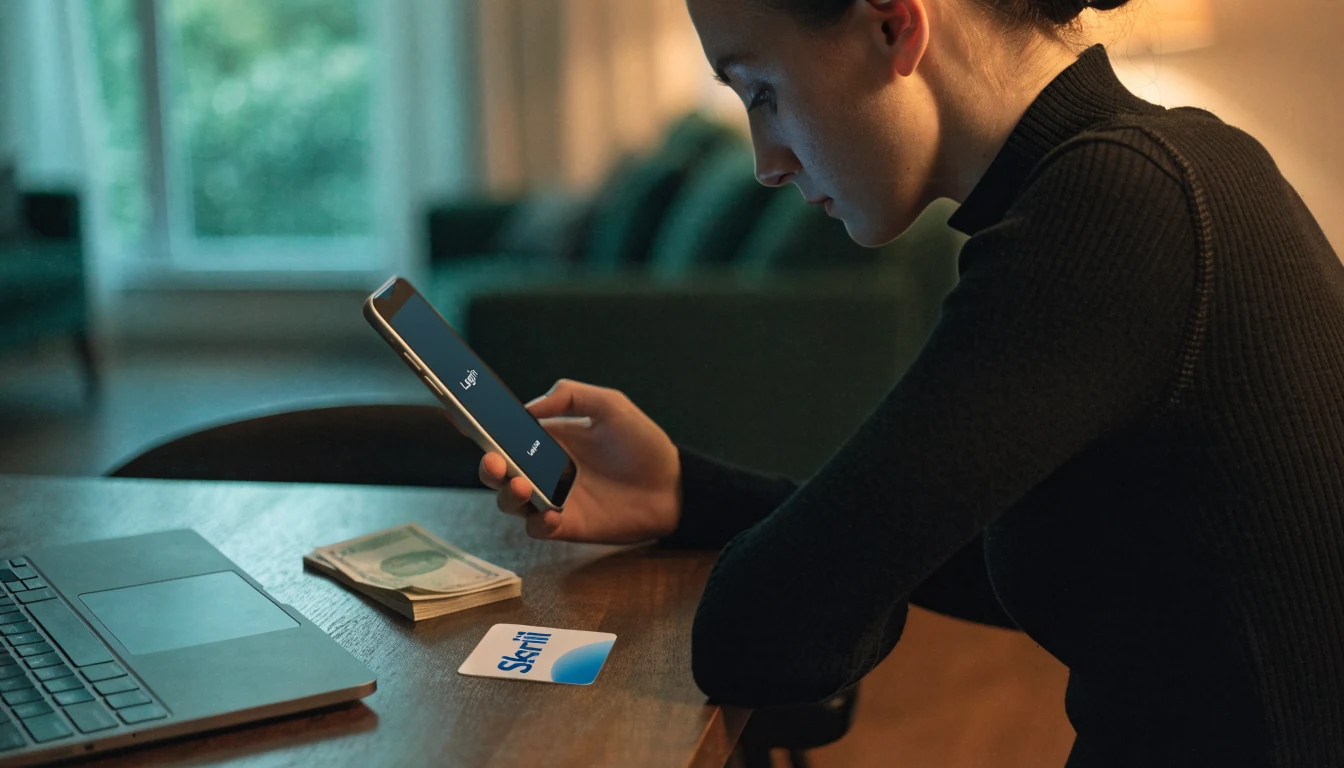
A specialist review identifies MrQ, Duelz, Mr Vegas and Videoslots as operators where Pay by Phone deposits count towards bonus eligibility. This is a specific reported finding, not a general rule for mobile payments or a guarantee that every offer at those casinos includes such deposits. Eligibility can differ between promotions and may change, so the relevant terms need to be checked before a deposit is made.
For Boku, a separate specialist review reports that the casinos it assessed did not impose Boku-specific restrictions on bonuses, while also noting that Boku deposits generally were not linked to dedicated offers. Those points do not establish that every Boku deposit qualifies for every welcome bonus. A promotion may still exclude the method, or set conditions that apply regardless of how the account was funded. The available evidence therefore supports a distinction between having no stated Boku-specific restriction and having confirmed eligibility for a particular bonus.
The offer terms should be read for any payment-method exclusions, qualifying deposit conditions and wagering requirements. A casino’s general bonus page may not resolve the question if its conditions differ by promotion. Where the wording is unclear, confirmation from the operator is more reliable than assuming that a Pay by Phone option in the cashier is eligible.
The regulatory status of the casino is separate from bonus eligibility. Online gambling in Great Britain must be provided by an operator holding the relevant UK Gambling Commission licence. A valid licence does not mean that a particular payment method qualifies for a particular promotion; these are separate checks. Thus, the confirmed cases provide useful, limited evidence, while eligibility elsewhere remains operator- and offer-specific.
Attention Pay by Phone deposits may not qualify for welcome offers or promotions; always check the specific terms and conditions of each operator.
Deposit Limits and the Lack of a Boku Withdrawal Route
Boku limits can apply at more than one level, and published descriptions do not agree on how they are structured. A specialist review gives a standard UK transaction ceiling of £30, while noting that some casinos or mobile operators may permit £40 or £50. Other descriptions instead state a daily limit of £30 without specifying a separate cap for each transaction. These accounts should not be combined into a single universal rule: the applicable amount depends on the payment arrangement available to the customer.
There is also a distinction between a casino’s cashier limit and a limit applied by the mobile network. A specialist review attributes daily Boku limits to the mobile operator rather than the casino. On that account, a casino may display an amount that cannot be completed if the network’s limit has already been reached. The casino and the mobile operator therefore may not enforce the same restriction, and the cashier’s displayed options do not necessarily establish the network’s remaining allowance.
These constraints matter when comparing an SMS payment casino in the UK with other deposit routes. A casino may accept Boku while the amount permitted for a particular transaction, or across a day, remains subject to separate controls. The available descriptions are not consistent enough to treat one limit structure as applying to every operator and network.
Boku also has a firm limitation on the direction of payment: it can fund a casino account, but it cannot receive winnings. A withdrawal must therefore be made through another method accepted by the casino. This is separate from the deposit limit; even when a Boku payment is accepted, the method does not provide a route for returning casino funds to the phone account.
The practical distinction is important for anyone considering casino SMS payments. Boku is a deposit channel rather than a complete payment account, and its limits may be shaped by both the casino’s arrangements and the mobile operator’s controls. A separate withdrawal method must be available before Boku is used to fund play.

SMS Deposits and Online Slots in Britain
Paying by SMS and choosing an online slot are separate parts of a casino account. Boku is a way to put funds into an account; it does not identify a particular game or create a special category of slots. A casino’s slot catalogue is determined by the operator, not by the payment method used to make a deposit. There is therefore no basis for treating “SMS slots” as a distinct set of games.
The same distinction applies to searches for a £10 deposit by SMS. A deposit amount does not establish which slots are available, and a payment option should not be read as a promise of access to any particular game. Boku is deposit-only: casino funds cannot be withdrawn to it. The payment route and the games available after funds reach an account remain separate matters.
Slot play in Britain is subject to rules that apply regardless of how an account was funded. Online slots must not offer autoplay, and each spin must last at least 2.5 seconds. A maximum stake per game cycle also applies: it is £2 for customers aged 18 to 24 and £5 for customers aged 25 and over. The £5 limit for all adults took effect on 9 April 2025.

These rules govern play rather than deposits. They do not establish that an operator accepts Boku, nor do they connect a specific slot to an SMS payment. Online gambling is legal in the UK at sites holding the relevant UK Gambling Commission licence; operators serving customers in Great Britain must be licensed even when their equipment is located elsewhere. The licence concerns the operator’s authority to offer gambling, while the slot rules concern how games may be played.
Accordingly, an SMS deposit does not alter the applicable slot restrictions or make a particular game available. The relevant checks are distinct: whether the casino accepts the payment method, whether it holds the required licence, and what games and terms it offers.
What are the deposit limits at pay by mobile casinos?
Boku’s standard UK limit is £30 per transaction, although some casinos or networks may allow £40 or £50. Network limits are typically about £10 per transaction and £30 per day; PAYG deposits are also limited by your remaining phone credit.
How to deposit with Boku at online casinos?
Choose Boku in the casino cashier, enter the deposit amount and your mobile number, then confirm using the SMS verification code. Deposits are charged to your phone bill or deducted from your PAYG credit, and the amount must be divisible by ten.
How can I be sure Boku is available where I live?
Check whether Boku appears in the casino’s current cashier and whether your mobile network supports it. Pay by mobile services are supported by EE, O2, Vodafone and Three, but availability can vary by casino.
Can I deposit by phone bill without Boku?
Yes. Some casinos offer alternatives such as Fonix or Siru Mobile; for example, MrQ and Duelz accept Fonix, while Mr Vegas and Videoslots accept Siru Mobile.
What is the standard Boku deposit limit in the UK?
The standard limit is £30 per transaction, though some casinos or network operators may allow up to £40 or £50. Network-level limits are typically about £10 per transaction and £30 per day.
Why are UK casinos dropping Boku?
Individual casino operators have removed Boku because of compliance risk, with some switching to alternatives such as Fonix or Siru Mobile. The UK Gambling Commission has not specifically banned Boku.
Published by the fam bet Casino team.